

Alternatives to LLM Reference
LLM Reference helps tech leaders quickly find and compare models, providers, and benchmarks to pick the right AI for every project.
Explore 20 alternatives to LLM Reference. Compare features, pricing, and find the best fit for your needs.

AIPetGen
Turn a photo of your pet into new pictures or short animations with AI. Sign in for a free 1K image daily.
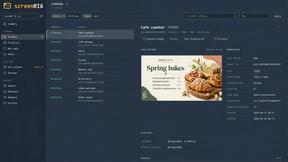
screenRIG
Signage and kiosk infrastructure for AI agents. Your agent publishes images, video, streams, web pages and apps to screens via one plugin.screenRIG is
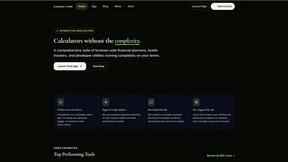
Luminus Tools
A comprehensive suite of browser-side financial planners, health trackers, and developer utilities running completely on your terms.
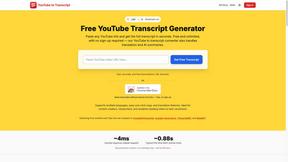
GetYouTubeTranscript
Free YouTube transcripts on the web, a Chrome extension, and an API + MCP server so AI assistants can read YouTube.

layahost
Moderation, routing, intent and scoring for any text over one Jev-compatible API, hosted in the EU.

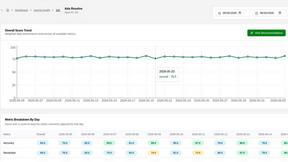


Speechyou
AI transcription for voice notes, meetings, and audio files in 1,700 languages, with AI summaries and subtitle export and unlimited chat ai usage.
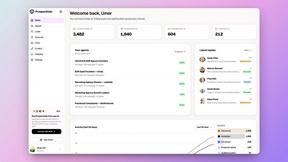
ProspectHalo
AI sales agent that finds qualified leads, runs outreach, follows up automatically, creates content, and helps book more meetings.

benchmark.directory
An AI tools directory that turns down money. 146 listings, 20 categories, no sponsored placement and no affiliate ordering.

saasgrow.ai
Get your SaaS tool discovered. Free listing, honest screening, a dofollow link — and no way for anyone to outbid you.

Tools Network
Tools Network is a curated directory of the best AI tools across 25+ categories — from writing and image generation to coding and marketing.

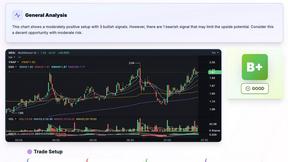
SnapPChart
SnapPChart grades a trading chart screenshot A+ to F, with an entry, stop, targets, and risk/reward. Works on stocks, forex, crypto, futures.


Skydive
Skydive lets teams create AI agents that can complete real work inside the tools they already use.

About LLM Reference Alternatives
LLM Reference is a decision-support directory designed for engineers and technology leaders who need to select the best large language model and provider for their specific project. It belongs to the AI Assistants category, functioning as a specialized comparison tool that tracks over 1,700 models from more than 130 providers and 235 research labs. Users commonly look for alternatives to this platform due to a variety of reasons, including the need for different pricing models, a desire for more integrated development environments, or a requirement for features that go beyond simple comparison, such as direct API access, fine-tuning capabilities, or deeper integration with existing workflows. Others may seek alternatives because they need a tool that covers a different set of benchmarks, offers a more streamlined user interface, or provides a different frequency of data updates. When choosing an alternative to a model comparison directory, you should prioritize several key factors. First, evaluate the breadth and freshness of the model database, ensuring the alternative covers the providers and model versions relevant to your work. Second, consider the specificity of the comparison criteria, such as cost per token, latency, context window size, and performance on task-specific benchmarks like coding or reasoning. Third, assess the usability of the platform, including how quickly you can filter, sort, and export data for your team. Finally, look for a tool that aligns with your workflow, whether that means offering an API for automated comparisons, providing a pulse feed for staying updated, or including curated recommendations from domain experts. The best alternative will save you time and reduce the risk of choosing an underperforming or overpriced model for your application.
FAQs about LLM Reference Alternatives
What is LLM Reference?
LLM Reference is a decision-support directory built for engineers and technology leaders who need to choose the right large language model and provider. It tracks over 1,700 models from more than 130 providers and 235 research labs, with data refreshed weekly to include new releases, price changes, and benchmark updates. The platform allows users to compare models side-by-side, see the cheapest pricing for frontier output, and browse curated editors' picks for specific tasks like coding, agents, writing, and research.
Who is LLM Reference for?
LLM Reference is designed for engineers, technology leaders, and product teams who need to select an LLM for a specific project, such as building a coding assistant, an agentic workflow, a writing tool, or a research pipeline. It is also useful for anyone who needs to stay current with the rapidly evolving LLM ecosystem, including researchers and developers who want a single, trustworthy source for model comparisons. The site is built for fast triage, helping users quickly identify the right model for their job and the most cost-effective provider.
Is LLM Reference free?
Based on the provided product description, LLM Reference is a publicly accessible directory that does not explicitly mention a paywall or subscription fee. It is described as a resource updated daily by the Data Advantage project, suggesting it is freely available for users to browse and compare models. Users can access the Pulse feed, curated editors' picks, and model comparison features without any indicated cost.
What are the main features of LLM Reference?
The main features of LLM Reference include a comprehensive directory of over 1,700 models from more than 130 providers, refreshed weekly with verified price changes and benchmark updates. It offers side-by-side model comparisons, a cost analysis tool to find the cheapest frontier output, and curated editors' picks for specific tasks like coding, agents, writing, research, image generation, and video creation. Additionally, it features a Pulse feed that highlights weekly changes, such as new models, price cuts, and benchmark refreshes, keeping users informed without noise.