
iGPT vs Threat Watch
Side-by-side comparison to help you choose the right product.

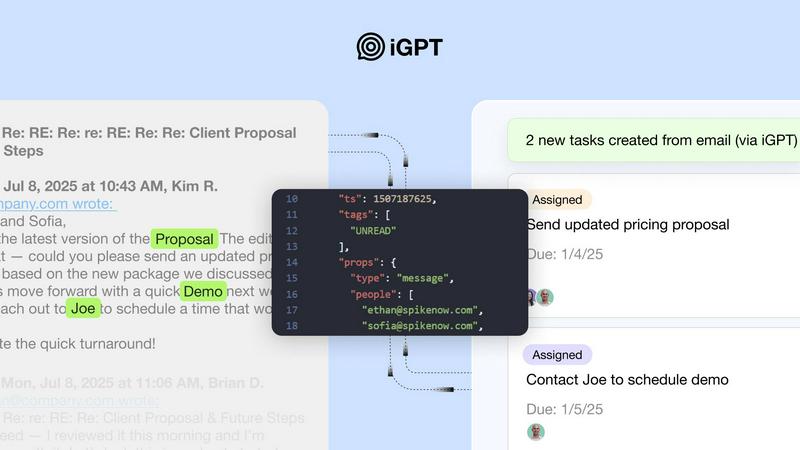
iGPT transforms enterprise emails into context-aware answers, streamlining AI agent workflows with trusted data.
Last updated: February 28, 2026

Threat Watch
Instantly assess your cybersecurity health with a free scan for critical vulnerabilities.
Last updated: March 1, 2026
Visual Comparison
iGPT
Threat Watch
Feature Comparison
iGPT
Immediate Integration
iGPT provides an SDK and a live playground that enables developers to quickly test requests and responses. This feature facilitates seamless integration with existing systems, making it easy to implement and start leveraging email intelligence right away.
Deep Email Indexing
The API automatically indexes emails and attachments, allowing for comprehensive data analysis. This deep indexing capability ensures that the relevant information across all communications is readily available for retrieval and context shaping, enhancing the accuracy of insights generated.
Unified Endpoint
iGPT simplifies the complexity of data retrieval by offering a single API request that combines retrieval, context shaping, and reasoning. This streamlined approach eliminates the need for multiple endpoints, reducing development time and improving the overall efficiency of information extraction.
Cited Answers
Every response generated by iGPT includes citations to the original messages and attachments. This feature not only enhances the credibility of the insights but also provides users with the ability to trace back information to its source, promoting transparency and reliability in decision-making.
Threat Watch
Comprehensive Cyber Health Assessment
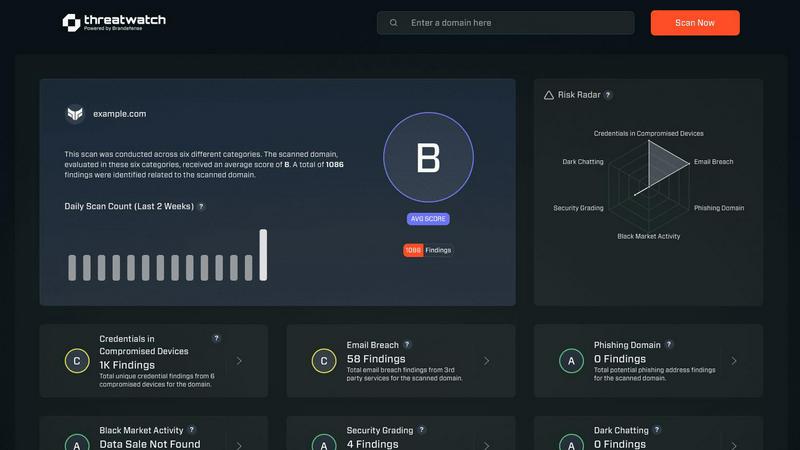
Threat Watch provides a unified, real-time dashboard that evaluates an organization's overall cybersecurity posture. It systematically scans and analyzes multiple critical security categories, delivering a clear and consolidated view of risks. This holistic assessment transforms disparate data points into an understandable security health score, enabling teams to quickly grasp their current standing and identify areas requiring immediate attention.
Automated Compromised Credentials Detection
The platform continuously monitors data breaches and leak repositories to identify if employee credentials, such as emails and passwords, have been exposed. This automated surveillance extends beyond public databases to include dark web sources, ensuring that stolen login information is flagged promptly. This allows security teams to enforce password resets and implement multi-factor authentication before accounts can be abused.
Breached Account and Phishing Risk Monitoring
Threat Watch actively tracks instances where corporate email accounts appear in known data breaches or are being used in phishing campaigns. It identifies if company domains are being spoofed or impersonated, alerting organizations to active phishing threats targeting their employees or customers. This early warning system is crucial for preempting social engineering attacks and protecting brand reputation.
External Attack Surface Analysis
The solution automates the discovery and assessment of an organization's externally visible digital assets, including domains, IP addresses, and associated services. It identifies misconfigurations, outdated software, and unintended exposures that could serve as entry points for attackers. This continuous mapping provides a clear picture of the external attack surface, enabling proactive hardening of defenses.
Use Cases
iGPT
Email Assistants
Organizations can build intelligent email assistants using iGPT, enabling agents to draft, prioritize, and take action on emails with full context. This capability helps teams manage their inboxes more effectively and increases overall productivity.
Workflow Automation
iGPT allows businesses to convert complex email threads into actionable tasks, deadlines, and approvals. By identifying and flagging stalled communications, teams can streamline their workflows and ensure that important actions are not overlooked.
Customer Support Copilots
With the ability to reconstruct complete customer stories from extensive email chains, iGPT empowers customer support agents to provide informed and empathetic responses. This capability enhances customer satisfaction by ensuring that agents fully understand the context of customer inquiries.
CRM Insights
iGPT facilitates the extraction of key decisions, ownership assignments, and momentum related to deals directly from email threads. This feature supports CRM systems by providing valuable insights into customer interactions, helping sales teams identify opportunities and follow up effectively.
Threat Watch
Proactive Risk Management for IT Security Teams
Security operations and IT teams use Threat Watch to shift from a reactive, alert-driven model to a proactive risk management stance. By having a centralized, real-time view of external threats like compromised credentials and dark web exposures, teams can prioritize remediation efforts based on actual risk, allocate resources more effectively, and prevent incidents before they escalate into full-scale breaches.
Compliance and Audit Readiness
Compliance officers and auditors leverage the platform to demonstrate due diligence in monitoring third-party and digital risks. The comprehensive reports and historical data provided by Threat Watch serve as evidence of continuous security monitoring, helping organizations meet regulatory requirements for data protection, risk assessment, and incident response preparedness across various frameworks.
Executive and Board-Level Security Reporting
Business leaders and board members utilize Threat Watch's clear, dashboard-driven insights to understand the organization's cyber risk in business terms. The platform translates technical vulnerabilities into prioritized business risks, facilitating informed decision-making regarding security investments and providing assurance that the digital attack surface is being actively managed.
Vendor and Third-Party Risk Assessment
Organizations extend their security monitoring to assess the cyber health of key partners and vendors. By analyzing the external digital footprint of third parties, businesses can identify if a supplier's breached data or exposed assets pose a downstream risk to their own network, enabling more informed vendor risk management and contract discussions.
Overview
About iGPT
iGPT is an advanced email intelligence API tailored for enterprise environments, designed to convert unstructured email communication and data into actionable insights. This API addresses the challenges of extracting reliable information from the often chaotic and complex landscape of email threads and attachments, where conventional AI solutions typically struggle. Targeted towards developers, product teams, and organizations creating intelligent systems, iGPT enhances capabilities in sales intelligence, customer success, compliance, and more. Its primary value proposition lies in providing a single, unified API endpoint that simplifies email context engineering. This encompasses real-time data ingestion, hybrid retrieval methods, thread reconstruction, and the generation of cited answers, allowing teams to streamline their workflows without the overhead of managing fragile data pipelines. With iGPT, organizations can deploy intelligent features faster while ensuring enterprise-grade security and auditability.
About Threat Watch
Threat Watch is a unified cybersecurity intelligence platform designed to provide organizations with a comprehensive and real-time view of their digital security posture. It functions as a centralized hub for cyber health assessment, continuously analyzing an organization's external digital footprint, assets, vulnerabilities, and exposures. The platform's core mission is to transform complex, fragmented threat data into a clear, actionable picture of risk. By automating the discovery and assessment of critical security categories, Threat Watch empowers IT security teams, compliance officers, and business leaders to move from reactive defense to proactive risk management. Its primary value proposition lies in its speed and clarity; it rapidly identifies issues like compromised credentials, breached accounts, phishing risks, and dark web exposures, allowing teams to prioritize and mitigate threats faster than traditional manual methods. It is ideally suited for businesses of all sizes seeking to understand their external attack surface and strengthen their defenses against evolving cyber threats. The platform's "Uncover your Cyber Security Health, Fast!" approach delivers immediate insights, enabling organizations to take swift, informed action to secure their digital perimeter.
Frequently Asked Questions
iGPT FAQ
How does iGPT ensure data security?
iGPT employs enterprise-grade security measures at every layer, including zero data retention and role-based access control (RBAC). This ensures that your data is processed securely and never stored or used for model training.
Can iGPT handle attachments?
Yes, iGPT can process a variety of attachment types, including documents, PDFs, and spreadsheets. It extracts text and data from these files to provide comprehensive insights in the context of the email threads.
What is the response time for queries?
iGPT boasts an impressive response time, retrieving data in approximately 200 milliseconds and delivering the first token within about 3 seconds, even when working with large and complex email data sets.
Is it easy to integrate iGPT with existing systems?
Absolutely. iGPT offers an SDK and a live playground that makes it simple for developers to test and integrate the API into their existing systems, ensuring a smooth onboarding process and quick access to email intelligence capabilities.
Threat Watch FAQ
What does Threat Watch actually scan and monitor?
Threat Watch performs a non-intrusive external scan of your organization's digital footprint. It monitors for compromised employee credentials in data breaches, detects corporate accounts involved in phishing schemes, identifies exposed company data on the dark web, and analyzes publicly accessible assets for vulnerabilities. It does not require internal network access or agents installed on your systems.
How quickly can I see results after starting a scan?
The platform is designed for speed and immediate insight. Upon initiating a scan, Threat Watch begins processing data from its continuously updated intelligence feeds. You can start seeing initial results, such as identified compromised credentials or breached accounts, very quickly, allowing for rapid assessment of your critical security health categories.
Is Threat Watch suitable for a small business without a dedicated security team?
Absolutely. Threat Watch is built for organizations of all sizes. Its centralized dashboard and clear, prioritized findings are designed to be actionable even for users without deep cybersecurity expertise. Small businesses can use it to understand their external risk exposure, take simple corrective actions like password changes, and significantly improve their security posture.
How does Threat Watch help in preventing a cyber attack?
Threat Watch enables prevention by focusing on pre-attack indicators. By identifying stolen credentials, phishing setups, and exposed assets before they are actively weaponized by attackers, the platform provides a crucial window for remediation. This allows you to reset passwords, take down phishing sites, and patch vulnerabilities proactively, closing doors that attackers would otherwise use to gain entry.
Alternatives
iGPT Alternatives
iGPT is an advanced email intelligence API designed specifically for enterprise environments. It excels in transforming unstructured email data into actionable insights, making it a valuable tool for developers and organizations focused on building intelligent systems and workflows. Users often seek alternatives to iGPT for various reasons, including pricing considerations, specific feature requirements, and compatibility with different platforms or systems. Choosing the right alternative involves assessing factors such as ease of integration, the comprehensiveness of features, scalability, and the level of support provided by the vendor. When looking for an alternative, it's essential to evaluate how well the solution can handle complex data extraction and processing needs, particularly in relation to email communications. Additionally, consider the security measures in place, as well as the potential for real-time data ingestion and the ability to integrate seamlessly with existing tools and workflows. A well-rounded alternative should offer a unified approach to email intelligence while ensuring reliability and support for enterprise-grade applications.
Threat Watch Alternatives
Threat Watch is a cybersecurity intelligence platform that provides businesses with a real-time, actionable view of their external digital security posture. It automates the discovery of vulnerabilities like exposed credentials and dark web exposures, delivering a clear cyber health score to guide risk management. Users explore alternatives for various reasons, including budget constraints, specific feature requirements not covered by a single platform, or the need to integrate with an existing security tech stack. The search often stems from a desire to compare capabilities, pricing models, or scalability for different organizational sizes. When evaluating alternatives, key considerations should include the scope of external attack surface monitoring, the depth and speed of threat intelligence, the clarity of risk prioritization, and the overall value relative to cost. The goal is to find a solution that effectively transforms complex threat data into proactive, defensible actions.