
Practical AI (Practical AI for SMB) vs Prefactor
Side-by-side comparison to help you choose the right product.

Practical AI (Practical AI for SMB)
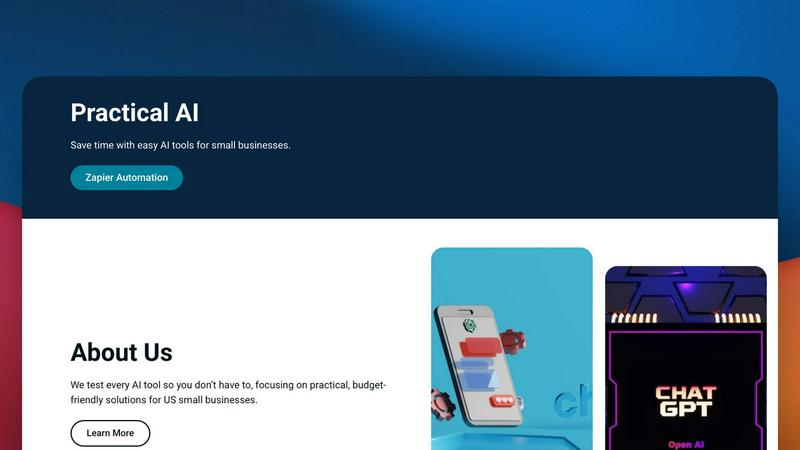
Practical AI provides tested guides and automation blueprints to save time for small business owners.
Last updated: April 4, 2026

Prefactor
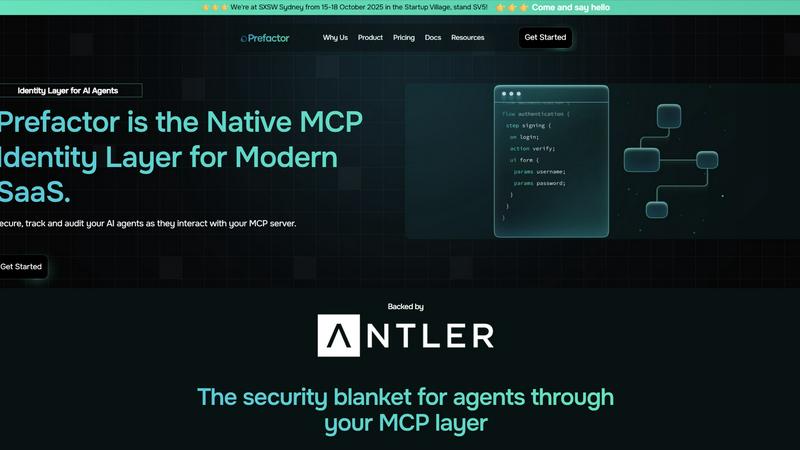
Prefactor is the control plane for governing AI agents at scale with security and compliance.
Last updated: March 1, 2026
Visual Comparison
Practical AI (Practical AI for SMB)
Prefactor
Feature Comparison
Practical AI (Practical AI for SMB)
Manually Tested, Real-World Guides
Every tutorial, automation blueprint, and tool review published on Practical AI is not theoretical. Each guide is manually tested in real-world business scenarios to ensure the steps are accurate, effective, and deliver the promised results. This hands-on validation provides users with confidence, saving them from the frustration of following untested or flawed online advice.
Industry-Specific Zapier Automation Blueprints
Moving beyond generic automation tips, Practical AI provides detailed, tailored blueprints for specific local service industries. This includes comprehensive guides for couriers, laundromats, landscapers, and more. These blueprints offer complete, step-by-step workflows for automating industry-specific tasks like dispatch, payment syncing, maintenance alerts, and customer communications.
Honest, Budget-Focused AI Tool Reviews
The platform offers unbiased reviews of AI tools and software, with a specific lens on value and practicality for small businesses. It cuts through marketing claims to assess whether a tool is truly user-friendly, cost-effective, and capable of delivering a strong return on investment for an SMB, helping owners avoid costly and unsuitable software choices.
Ready-to-Use Prompts & Workflows
Practical AI provides more than just concepts; it delivers immediate assets. Users get access to pre-written, optimized AI prompts for content creation and customer service, as well as fully built workflow templates for Zapier. This "copy-paste" functionality allows businesses to implement sophisticated automations and AI interactions rapidly, with minimal setup time.
Prefactor
Real-Time Agent Monitoring
Gain complete operational visibility across your entire agent infrastructure with a centralized control plane dashboard. Track every agent in real-time to see which agents are active, what resources they are accessing, and where failures or anomalies emerge—allowing you to identify and address potential incidents before they cascade into larger problems.
Compliance-Ready Audit Trails
Prefactor's audit logs are designed for regulatory scrutiny. They don't just record technical API events; they translate agent actions into clear business context and language that stakeholders and compliance officers understand. This enables you to generate audit-ready reports in minutes, not weeks, providing clear answers to "what did the agent do and why?"
Identity-First Control
Apply proven human governance principles to your AI agents. With Prefactor, every agent is assigned a unique, first-class identity. Every action is authenticated, and every permission is explicitly scoped. This identity-first foundation is critical for enforcing precise access control and maintaining a secure agent environment.
Enterprise-Grade Integrations & Cost Tracking
Deploy Prefactor in hours, not months, with seamless integration for popular AI agent frameworks like LangChain, CrewAI, and AutoGen, as well as custom builds. Additionally, track agent compute costs across different providers from a single dashboard to identify expensive operational patterns and optimize spending effectively.
Use Cases
Practical AI (Practical AI for SMB)
Automating Local Courier Operations
Courier service owners can implement the "Velocity-First" blueprint to automate their entire dispatch and delivery process. This includes setting up instant job dispatch to drivers, integrating AI for dynamic route optimization, automatically syncing proof-of-delivery (POD) documents, and triggering proactive client notifications, all leading to faster service and reduced manual coordination.
Modernizing Laundromat Management
Laundromat owners can use the "Remote Operator" blueprint to automate facility management. Workflows can be set up to send automatic machine repair alerts to technicians, sync remote payment system data, monitor energy usage, and send automated "Cycle Complete" notifications to customers, enabling efficient remote management and improved customer experience.
Streamlining Marketing & Content Creation
SMBs can leverage detailed guides and pre-built prompts to automate and enhance their marketing efforts. This includes using AI to generate SEO-optimized blog posts, social media content, and email campaigns, as well as setting up automations to schedule and publish this content, ensuring a consistent online presence without daily manual effort.
Enhancing Customer Service Efficiency
Businesses can automate initial customer service interactions to provide instant responses and triage inquiries. Guides show how to use AI chatbots for FAQs, automatically create support tickets from emails or form submissions, and set up notification systems for urgent issues, freeing up staff to handle more complex customer needs.
Prefactor
Scaling AI Agents in Regulated Finance
A Fortune 500 financial services company can use Prefactor to move AI agent pilots into production by providing the necessary audit trails and real-time visibility demanded by internal compliance and external regulators. This solves the common blocker of not being able to answer critical questions about agent activity and control.
Ensuring Safe Deployment in Healthcare
Healthcare technology firms can deploy AI agents for tasks like patient data analysis or administrative automation while maintaining strict HIPAA and data privacy compliance. Prefactor ensures every agent action is authenticated, logged in business-context terms, and can be immediately halted if necessary, creating a safe governance layer.
Managing Operational Risk in Heavy Industries
Mining or energy companies utilizing autonomous agents for supply chain or safety monitoring require absolute operational reliability. Prefactor provides the emergency kill switches and continuous monitoring needed to manage these high-stakes deployments, ensuring agents operate within strict safety and operational boundaries.
Unifying Multi-Framework Agent Fleets
Product and engineering teams running multiple AI agent pilots using different frameworks (e.g., LangChain and CrewAI) can use Prefactor as a unified control plane. It brings consistency to identity management, access control, and auditing across all agents, regardless of their underlying technology stack.
Overview
About Practical AI (Practical AI for SMB)
Practical AI (Practical AI for SMB) is a dedicated resource hub and expert guide specifically designed for US small and medium-sized businesses. Its core mission is to cut through the overwhelming hype surrounding artificial intelligence and deliver actionable, tested information. The platform focuses on providing clear, step-by-step guides and honest reviews that demonstrate how to leverage accessible AI tools (like ChatGPT and Claude) and no-code automation platforms (primarily Zapier) to solve real business problems. The content is meticulously created and manually tested in real-world scenarios by automation specialist Aapt Dubey, who brings direct experience from building over 800 workflows. The primary value proposition is enabling SMB owners and operators to automate repetitive tasks, streamline operations, enhance marketing efforts, and significantly boost overall efficiency without requiring technical expertise, a dedicated IT department, or a large budget. It serves as a trusted filter and practical instructor, transforming complex technological potential into simple, executable strategies for growth and time savings.
About Prefactor
Prefactor is the essential control plane for AI agents, designed to solve the critical governance gap that emerges when organizations transition autonomous agents from proof-of-concept to full-scale production. It provides a centralized platform for managing identity, access, and auditability across all AI agents within an enterprise. Built specifically for product and engineering teams in regulated industries like banking, healthcare, and mining, Prefactor addresses the core challenges of security, compliance, and operational visibility that typically block safe agent deployment at scale. Its main value proposition is transforming complex, ad-hoc agent authentication and monitoring into a single, elegant layer of trust. By assigning every AI agent a first-class, auditable identity and enabling policy-as-code management, Prefactor aligns security, product, engineering, and compliance teams around one unified source of truth. This allows companies to govern their AI agent fleets faster with shared visibility and control, ensuring agents can operate safely and reliably in environments where "move fast and break things" is not an option.
Frequently Asked Questions
Practical AI (Practical AI for SMB) FAQ
Who is the creator behind Practical AI?
Practical AI was created by Aapt Dubey, a lead automation specialist and founder with direct, hands-on experience building over 800 automation workflows for businesses. This extensive practical background ensures the advice and guides are grounded in real-world application and effectiveness, not just theory.
Do I need technical skills to use these guides?
No technical skills or coding knowledge are required. The core philosophy of Practical AI is to make automation and AI accessible to everyone. Guides are written as clear, step-by-step instructions using no-code platforms like Zapier and user-friendly AI tools, designed specifically for business owners and operators without a technical background.
What makes Practical AI different from other AI blogs?
Practical AI differentiates itself through its strict focus on US SMBs, its manual real-world testing of every guide, and its provision of industry-specific automation blueprints. Instead of generic news or hype, it provides immediately actionable, budget-conscious, and tested solutions for defined business problems in specific verticals.
Are the tool recommendations and links sponsored?
Transparency is key. Practical AI has a clear Affiliate Disclosure policy. While some links may be affiliate links that provide a commission, all tool reviews and recommendations are based on honest, hands-on testing. The primary goal is to recommend tools that offer genuine value and utility for small businesses.
Prefactor FAQ
What is an AI Agent Control Plane?
An AI Agent Control Plane is a centralized management layer that provides governance, security, and operational oversight for autonomous AI agents. Think of it like an identity and access management (IAM) system or a Kubernetes control plane, but specifically built for managing the lifecycle, permissions, and auditability of AI agents across an organization.
Who is Prefactor designed for?
Prefactor is primarily built for product and engineering teams within regulated enterprises—such as those in banking, healthcare, insurance, and critical infrastructure—who are running multiple AI agent pilots and need to solve the governance and compliance challenges required to move them into secure, scalable production.
How does Prefactor handle compliance and auditing?
Prefactor creates detailed, immutable audit logs that capture every agent action. Crucially, it translates low-level technical events (like API calls) into high-level business activities that compliance officers and auditors can easily understand. This allows teams to quickly generate reports that demonstrate exactly what agents did and why, satisfying regulatory requirements.
Can Prefactor work with any AI agent framework?
Yes, Prefactor is designed to be framework-agnostic. It offers integrations and SDKs for popular frameworks like LangChain, CrewAI, and AutoGen, and can also integrate with custom-built agent systems. This allows you to manage a heterogeneous fleet of agents from a single, unified dashboard and control plane.
Alternatives
Practical AI (Practical AI for SMB) Alternatives
Practical AI (Practical AI for SMB) is a specialized resource hub in the AI assistants and automation guidance category. It provides manually tested, step-by-step guides and workflows to help small and medium-sized businesses implement AI and no-code automation for tasks like marketing, customer service, and operations without technical expertise. Users may explore alternatives for various reasons. Some seek different pricing models or subscription structures. Others might need guidance tailored to a specific industry niche not covered, or prefer a different content format, such as video tutorials over written guides. Platform-specific needs, like a focus on a particular AI tool, can also drive the search. When evaluating an alternative, consider the depth and practicality of the content. Look for resources that offer proven, real-world examples and clear instructions. The credibility of the creators, based on hands-on experience, is crucial. Finally, ensure the alternative's scope aligns with your business's specific automation goals and the tools you already use or plan to adopt.
Prefactor Alternatives
Prefactor is a specialized control plane platform within the AI governance and security category. It is designed to provide centralized identity, access, and audit management for AI agents, enabling secure and compliant deployment at scale in regulated industries. Users may explore alternatives for various reasons, including budget constraints, specific feature requirements not covered, or a need for a solution that integrates with a different technology stack or a broader platform. The evaluation process often involves comparing core capabilities and total cost of ownership. When selecting an alternative, key considerations should include robust agent identity and authentication, comprehensive audit logging for compliance, real-time operational visibility, and the ability to enforce security policies programmatically. The solution must align with your organization's specific regulatory requirements and technical environment.