
Crawlkit vs Fallom
Side-by-side comparison to help you choose the right product.

Crawlkit
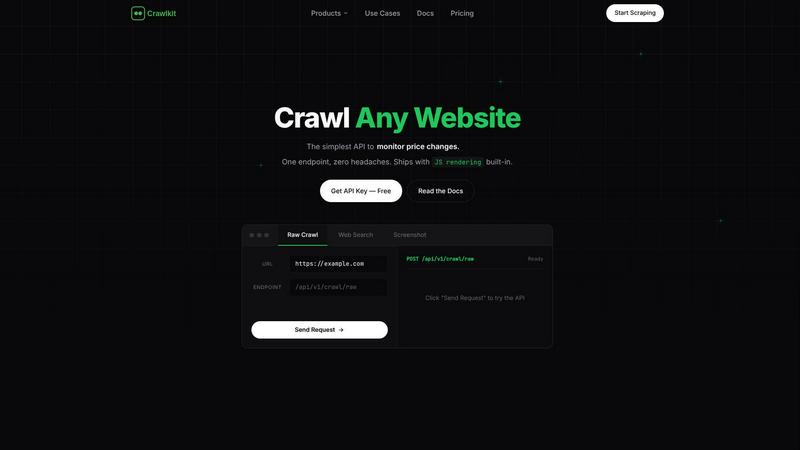
Crawlkit provides a simple API to extract structured data and screenshots from any website with just one request.
Last updated: February 28, 2026

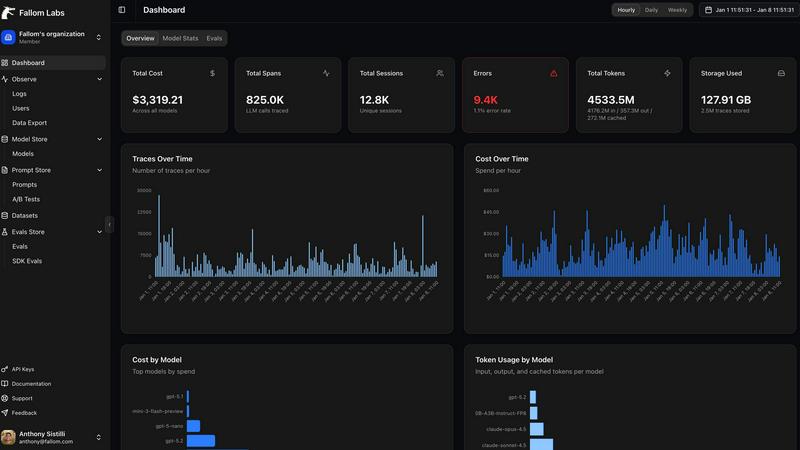
Fallom is an AI observability platform for tracking and optimizing LLM and agent operations.
Last updated: February 28, 2026
Visual Comparison
Crawlkit
Fallom
Feature Comparison
Crawlkit
Simplified API Access
Crawlkit features a single, consistent API interface that allows users to extract structured data from multiple sources with just one request. This eliminates the need for managing different APIs and offers a unified experience, making it easier for developers to integrate data extraction into their workflows.
Automated Proxy Management
The platform automatically handles the complexities of proxy rotation and management. This feature ensures that users can access data without being blocked or slowed down by anti-bot measures, allowing for uninterrupted data collection and analysis.
Real-Time Data Validation
Crawlkit guarantees complete and accurate data by waiting for full page loads and validating responses before delivering them. This means users receive clean, structured data ready for use, significantly reducing the time spent on data cleaning and error handling.
Flexible, Credit-Based Pricing
Crawlkit operates on a transparent credit-based pricing model, where users pay only for the requests they make. With no hidden fees and the ability to purchase credits in bulk for discounted rates, this flexible pricing structure makes it accessible for businesses of all sizes.
Fallom
End-to-End LLM Tracing
Fallom provides comprehensive tracing for every LLM call, capturing granular details in real-time. This includes the full prompt, model output, any function or tool calls made, token counts, latency metrics, and the calculated cost per call. This deep visibility is essential for debugging complex agentic workflows, understanding performance bottlenecks, and gaining a precise view of operational costs.
Cost Attribution and Transparency
The platform offers detailed cost tracking and attribution, breaking down spend by model, team, user, or customer. This provides full financial transparency for budgeting, forecasting, and internal chargeback processes. Teams can monitor live usage, set alerts for budget overruns, and make informed decisions about model selection based on both performance and cost-efficiency.
Compliance-Ready Audit Trails
Fallom is built for regulated industries, providing immutable, complete audit trails of every AI interaction. This includes full input/output logging, model versioning, and user consent tracking. These features are designed to help organizations meet stringent regulatory requirements such as the EU AI Act, SOC 2, and GDPR, ensuring accountability and traceability in AI operations.
Session Tracking and User Context
Group individual traces into complete user sessions to understand the full customer journey. This feature provides context for interactions, allowing teams to analyze how users engage with AI features, troubleshoot specific customer issues, and calculate the total cost-to-serve per user or account, enabling better product and support insights.
Use Cases
Crawlkit
Lead Generation for Sales Teams
Crawlkit can automatically enrich customer relationship management (CRM) systems with data from LinkedIn. By extracting job titles, company information, and contact details, sales teams can generate high-quality leads efficiently.
Social Media Monitoring
Businesses can use Crawlkit to track competitors' Instagram growth metrics, such as follower counts and engagement rates. This information enables companies to analyze trends, adapt their strategies, and identify top-performing content over time.
App Review Analysis
Crawlkit can be utilized to pull all relevant app reviews from platforms like the App Store and Play Store. This data helps businesses understand user sentiment, identify common issues, and enhance product offerings based on user feedback.
Market Research and Competitive Intelligence
Organizations can leverage Crawlkit to gather data about competitors' offerings, pricing, and marketing strategies from various websites. This information serves as valuable insight for businesses looking to refine their strategies and stay ahead in the market.
Fallom
Production Debugging and Performance Optimization
Engineering teams use Fallom to rapidly diagnose failures and latency issues in live AI applications. By examining timing waterfalls and tool call sequences, developers can pinpoint exactly where in a multi-step agent workflow a problem occurred, whether it's a slow LLM call, a failing tool, or a logic error, drastically reducing mean time to resolution (MTTR).
Financial Governance and Cost Control
Finance and engineering leadership utilize Fallom's cost attribution features to monitor and control AI expenditure. By tracking spend per model, team, or product feature, organizations can identify cost drivers, optimize expensive workflows, implement chargebacks, and ensure AI initiatives remain within budget, transforming AI costs from a black box into a manageable line item.
Regulatory Compliance and Auditing
Compliance and legal teams leverage Fallom to demonstrate adherence to AI regulations. The platform's immutable audit trails, consent tracking, and detailed logging provide the necessary evidence for audits required by standards like the EU AI Act or SOC 2. Privacy mode features also allow sensitive data to be redacted while maintaining operational telemetry.
Model Evaluation and A/B Testing
Product and ML teams employ Fallom to run evaluations, test new prompts, and safely roll out new model versions. The platform facilitates A/B testing by splitting traffic between models or prompt versions, allowing teams to compare performance, cost, and quality metrics like accuracy or hallucination rates before committing to a full production deployment.
Overview
About Crawlkit
Crawlkit is a powerful web data extraction platform designed specifically for developers and data teams seeking scalable and reliable access to web data. By streamlining the complexities associated with modern web scraping, Crawlkit allows users to bypass the burdens of building and maintaining intricate scraping infrastructures. Its core value lies in simplifying technical challenges, such as managing rotating proxies, executing headless browsers, and circumventing sophisticated anti-bot protections. With a single API request, users can access various data types, from raw HTML to structured results and visual snapshots from platforms like LinkedIn and Instagram. This abstraction frees developers to focus on data analysis rather than the tedious process of data collection. Trusted by leading tech companies, Crawlkit emerges as the go-to solution for building powerful data pipelines and monitoring web activities at any scale, ensuring that users have access to complete and reliable data with minimal hassle.
About Fallom
Fallom is an AI-native observability platform engineered specifically for monitoring and optimizing Large Language Model (LLM) and AI agent workloads in production environments. It provides engineering, product, and compliance teams with comprehensive, real-time visibility into every AI interaction, moving organizations from blind deployment to data-driven management of their AI applications. The platform's core value proposition is delivering end-to-end tracing for LLM calls, capturing granular details such as prompts, outputs, tool calls, token usage, latency, and per-call costs.
Built on the open standard OpenTelemetry (OTEL), Fallom offers a single, lightweight SDK that allows teams to instrument their applications in minutes, eliminating vendor lock-in. It is designed for enterprises that require scale, reliability, and compliance, featuring session-level context for user journeys, timing waterfalls for complex multi-step agents, and robust audit trails. By centralizing observability, Fallom empowers teams to debug issues faster, monitor usage live, attribute spend accurately across models and teams, and ensure their AI systems are performant, cost-effective, and compliant with regulations like the EU AI Act, SOC 2, and GDPR.
Frequently Asked Questions
Crawlkit FAQ
What types of data can I extract using Crawlkit?
Crawlkit allows users to extract a variety of data types, including structured data from social media platforms, app stores, and websites. This includes company profiles, user engagement metrics, and search results.
Is there a limit to how many requests I can make?
Crawlkit uses a credit-based system for requests, allowing users to make as many requests as they have credits for. There are no monthly commitments or rate limits, providing flexibility in how data can be accessed.
How does Crawlkit ensure data accuracy?
Crawlkit waits for full page loads and performs validation checks before returning data to users. This process minimizes the risk of receiving incomplete or broken data, ensuring high-quality outputs.
Can I use Crawlkit with any programming language?
Yes, Crawlkit is designed as a simple HTTP API that can be integrated into any programming language or platform. This versatility allows developers to use Crawlkit seamlessly with their existing tools and frameworks.
Fallom FAQ
How does Fallom integrate with my existing AI applications?
Fallom integrates via a single, lightweight OpenTelemetry (OTEL)-native SDK. You can instrument your applications in under five minutes by adding the SDK, which automatically captures traces from LLM calls, tool usage, and custom spans. Being OTEL-based, it avoids vendor lock-in and works with a wide range of LLM providers and frameworks.
Does Fallom store sensitive user data from prompts and responses?
Fallom offers a configurable Privacy Mode to address this concern. You can choose to disable full content capture for sensitive data, redact specific fields, or log only metadata (like token counts and latency) while protecting confidential information. This allows you to maintain full observability for debugging while adhering to data privacy policies.
Can Fallom track costs for different teams or projects?
Yes, detailed cost attribution is a core feature. Fallom automatically breaks down costs by the LLM model used. You can further enrich traces with custom attributes (like team ID, project name, or user ID) to slice and dice spending across any dimension, enabling precise showback/chargeback and helping teams understand their AI resource consumption.
Is Fallom suitable for large-scale enterprise deployments?
Absolutely. Fallom is engineered for enterprise-scale, reliability, and security. It handles high-volume tracing data, offers robust access controls, and provides features essential for large organizations, including comprehensive audit trails, SOC 2/GDPR-ready compliance tools, and the ability to monitor complex, multi-agent AI systems across entire product suites.
Alternatives
Crawlkit Alternatives
Crawlkit is a robust API designed specifically for developers and data teams, facilitating the extraction of data and screenshots from any website. It falls under the category of web data extraction platforms, streamlining the often complex process of web scraping by providing a reliable and scalable solution. Users frequently seek alternatives to Crawlkit due to various factors, including pricing models, feature sets, and specific platform requirements that may better align with their unique projects or budgets. When choosing an alternative to Crawlkit, it is essential to consider several key aspects. Look for features that support the specific data extraction needs you have, such as API capabilities, ease of integration, and the ability to manage anti-bot measures. Additionally, evaluating the reliability of the service, customer support options, and overall user experience can significantly influence your decision.
Fallom Alternatives
Fallom is an AI-native observability platform designed for monitoring and optimizing Large Language Model (LLM) and AI agent operations in production. It falls into the category of specialized development tools for AI application management, providing end-to-end tracing, cost analysis, and compliance features. Users may explore alternatives to Fallom for various reasons, including budget constraints, specific feature requirements not covered, or a need for a platform that integrates more tightly with their existing tech stack. Different organizations have unique priorities, such as open-source flexibility, different pricing models, or specialized support for certain cloud providers or agent frameworks. When evaluating an alternative, key considerations should include the depth of LLM and agent tracing capabilities, support for compliance and audit trails, ease of integration and vendor lock-in, scalability for enterprise workloads, and the overall total cost of ownership. The goal is to find a solution that delivers the necessary visibility and control for your specific AI deployment.