
Requestly
Requestly is a fast, git-based API client for effortless testing and collaboration without requiring a login.
Visit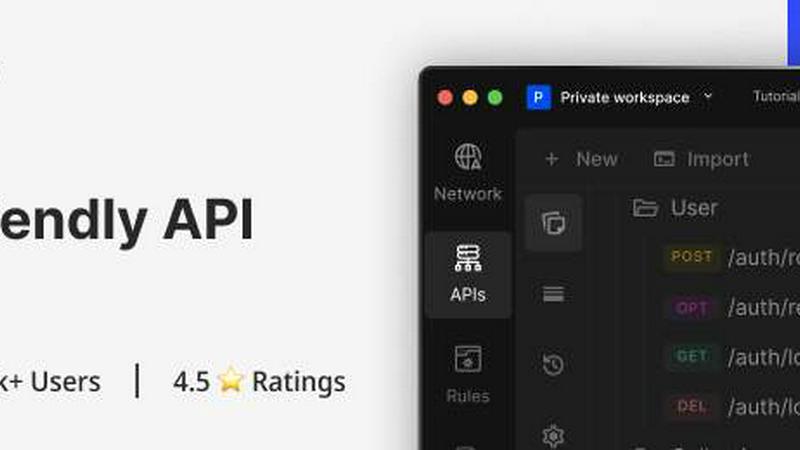
About Requestly
Requestly is a modern, lightweight API client built for developers and development teams who demand control, speed, and efficiency in their API workflows. It serves as a powerful alternative to traditional, often bloated, cloud-based API platforms. Its core philosophy is local-first, meaning all your API collections, environments, and data are stored directly on your machine as files, ensuring maximum privacy, security, and portability. This git-native approach allows teams to version-control their API specifications seamlessly within their existing Git repositories, fostering collaboration through familiar developer workflows. Integrated with AI capabilities, Requestly accelerates the process of writing requests, generating tests, and debugging APIs. It provides comprehensive support for both REST and GraphQL APIs, featuring schema introspection, environment variables, and pre/post-request scripts. With a strong emphasis on accessibility and collaboration, Requestly offers a generous free tier that includes shared workspaces and role-based access control, all without requiring a login to get started. Trusted by over 300,000 developers from leading companies like Microsoft, Amazon, and Google, Requestly is designed to be the fast, secure, and developer-friendly API client that doesn't slow you down.
Features of Requestly
Git-Native Collections
Requestly stores your API collections as local files on your machine, enabling seamless integration with version control systems like Git. This allows development teams to track changes, review history, and collaborate on API specifications using the same workflows they use for code. It eliminates vendor lock-in and ensures your API definitions are always portable and under your direct control, enhancing both security and team collaboration.
No-Login Required & Local-First Architecture
You can start using Requestly immediately without creating an account or signing in. This underscores its commitment to privacy and efficiency. The local-first architecture ensures all your sensitive API data, including requests, responses, and environment variables, are stored securely on your local device rather than on external servers, giving you complete data sovereignty and peace of mind.
AI-Enhanced API Development
Requestly integrates artificial intelligence directly into its core to streamline API workflows. The AI assists developers by intelligently generating requests, writing test cases, and aiding in debugging processes. This reduces manual effort, accelerates development cycles, and helps catch issues faster, making the overall API interaction more intuitive and productive for developers of all skill levels.
Comprehensive REST & GraphQL Support
The client provides full-featured support for both REST and GraphQL APIs. For GraphQL, it offers advanced features like schema introspection and auto-completion for queries. For all API types, it includes powerful capabilities such as environment variables for dynamic values, pre-request scripts to modify requests before sending, and post-response scripts to process results, creating a versatile testing and development environment.
Use Cases of Requestly
Development Teams Needing Version-Controlled API Specs
Teams that manage API specifications as part of their codebase benefit immensely. By storing collections as files in Git, developers can propose changes via pull requests, conduct code reviews on API endpoints, and maintain a single source of truth alongside their application code, ensuring consistency and improving collaboration between frontend and backend developers.
Security-Conscious Organizations Handling Sensitive Data
Companies in regulated industries or those working with sensitive API keys and data require tools that prioritize security. Requestly's local-first approach ensures no sensitive data is transmitted to or stored in the cloud without explicit consent. This use case is critical for enterprises that must comply with internal security policies or external regulations like SOC-II.
Developers Migrating from Bloated API Clients
Developers frustrated with slow, complex, or login-mandatory API platforms like Postman can switch to Requestly for a streamlined experience. The one-click import feature allows for easy migration of existing collections and environments. Users gain a faster, more lightweight tool that focuses on core API testing functionality without unnecessary bloat or friction.
Collaborative API Design and Testing
Teams can use Requestly's free shared workspaces and role-based access control (RBAC) to collaborate effectively. API designers, developers, and QA engineers can work within the same workspace, with admins controlling edit permissions. This facilitates shared environment variables, collective debugging, and ensures everyone is testing against the same endpoints and data sets.
Frequently Asked Questions
How does Requestly's local-first approach benefit me?
The local-first approach means all your API collections, environment variables, and request history are stored as files directly on your computer. This provides significant benefits: enhanced security and privacy as your data never leaves your machine unless you choose to sync it via Git; improved performance with no network latency for loading collections; and full data portability, allowing you to easily back up or transfer your work.
Can I import my existing Postman collections into Requestly?
Yes, Requestly offers a straightforward, one-click import process for Postman collections. You can easily migrate your complete Postman workspace, including collections, environments, and associated scripts, into Requestly. This allows for a seamless transition without losing any of your existing work, making it simple to switch to a more lightweight and git-native workflow.
Is team collaboration really free in Requestly?
Yes, Requestly offers free team collaboration features. This includes the ability to create shared workspaces where team members can jointly work on API collections. It also provides role-based access control (RBAC) for free, allowing you to assign roles like Admin, Editor, or Viewer to team members to manage permissions effectively without requiring a paid subscription.
What kind of support does Requestly offer for GraphQL APIs?
Requestly provides robust, dedicated support for GraphQL APIs. It features an intelligent GraphQL client that can introspect your GraphQL schema to provide auto-completion and validation for your queries. It also supports setting custom headers and variables, making it a fully-featured GraphQL IDE for testing and debugging your GraphQL endpoints efficiently.
Similar to Requestly

The #1 Native Form Builder Plugin for Framer - No Code, No Embeds, No External Platforms.

Generate and edit production-ready images with GPT Image 2 API using detailed prompts, reference images, clear text rendering, and developer-friendly

Create videos from prompts and images with RunwayAI, an independent runway ai video generator with practical output controls.


Free, no-signup Unicode text tools: superscript, fancy fonts, case converter, symbols. Fast and private.

