
Lovalingo vs Unicode to Bamini Converter
Side-by-side comparison to help you choose the right product.

Lovalingo
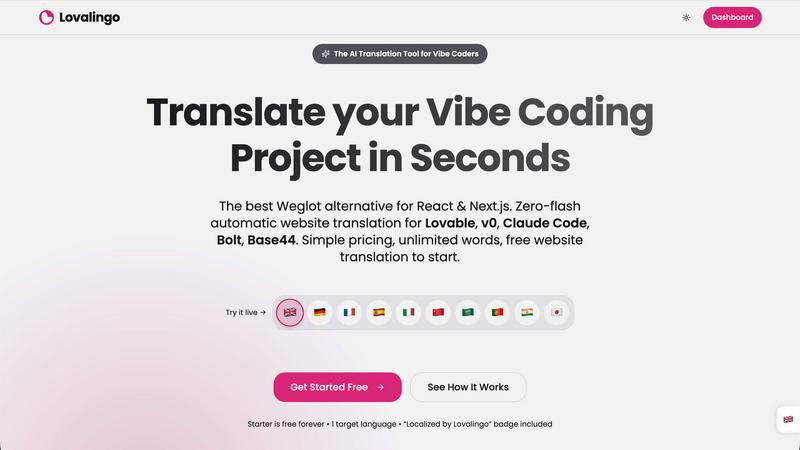
Lovalingo enables instant translation of React apps in 60 seconds with automated SEO and no JSON required.
Last updated: February 26, 2026

Unicode to Bamini Converter
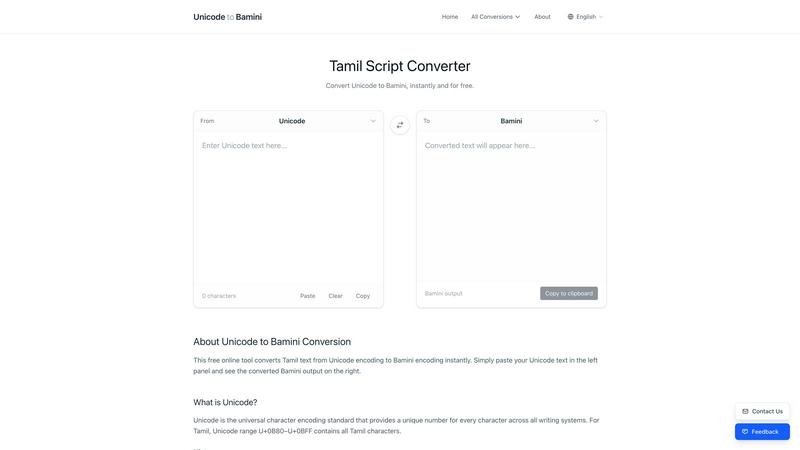
Free online Tamil font converter. Instantly convert between Unicode, Bamini, TSCII, Anjal, and 20+ Tamil encodings. No download required.
Visual Comparison
Lovalingo
Unicode to Bamini Converter
Overview
About Lovalingo
Lovalingo is an innovative translation tool designed specifically for developers leveraging Vibe coding frameworks such as React and Next.js. It addresses the common challenges associated with traditional internationalization (i18n) methods, which often involve cumbersome manual management of JSON strings, layout issues, and SEO complications. By replacing outdated i18n practices with seamless, automated, render-native translation, Lovalingo empowers SaaS founders, agencies, and developers to scale their applications globally without the usual headaches. With automatic multilingual sitemaps, hreflang tags, and real-time content updates, Lovalingo ensures that your applications are ready for a global audience from day one, all while maintaining the performance and stability of your web applications.
About Unicode to Bamini Converter
Unicode to Bamini Converter is a free, web-based tool designed for converting Tamil text between 25+ font encodings instantly.
Key Features:
- Convert between Unicode, Bamini, TSCII, Anjal, TAB, Dinamani, Murasoli, and 20+ other Tamil font formats
- Instant real-time conversion with no page reloads
- Complete character mapping table for every encoding pair
- No software download or installation required
- Works on desktop and mobile devices
- Available in 5 languages: English, Tamil, Sinhala, Hindi, and Chinese
Who It's For:
Tamil publishers, journalists, and content creators who need to convert legacy Tamil documents (Bamini, TSCII) to modern Unicode format. Also useful for developers, researchers, and anyone working with Tamil text across different encoding systems.
Why It Exists:
Thousands of Tamil documents, newspapers, and archives still use legacy font encodings like Bamini and TSCII. These files require the original fonts installed to display correctly. Converting them to Unicode ensures they are accessible on any modern device, browser, or platform without font dependencies.