
dmaya vs Postproxy
Side-by-side comparison to help you choose the right product.

dmaya
dMaya is an AI design platform that streamlines UI creation, client collaboration, and code export for agencies and teams.
Last updated: April 13, 2026

Postproxy
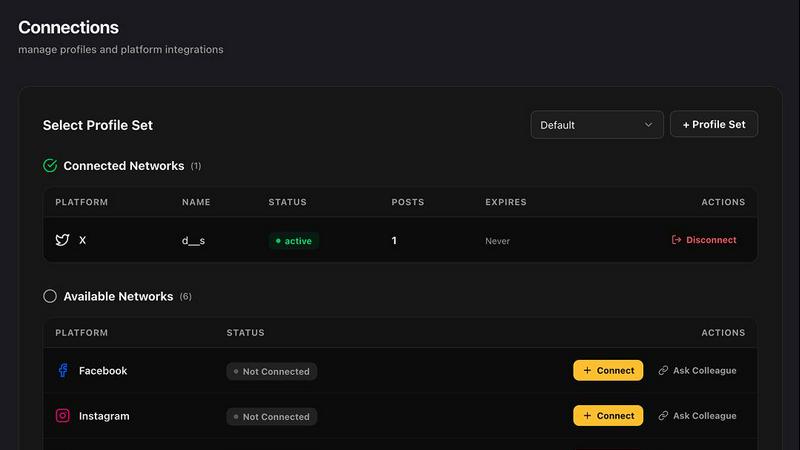
Postproxy simplifies social media publishing by unifying multiple platforms into a single, reliable API integration.
Last updated: February 26, 2026
Visual Comparison
dmaya

Postproxy
Feature Comparison
dmaya
AI-Powered Design Generation
dMaya utilizes advanced AI technology to generate production-ready UI designs in mere seconds. Users can describe their design needs in natural language, and the platform will create complete layouts, component systems, and responsive variants, significantly reducing the design time.
Multi-Screen Canvas
The platform features an infinite canvas that supports simultaneous work across desktop and mobile frames. Users can drag, zoom, and organize screens akin to Figma, but with the added advantage of AI assistance, allowing for smoother workflow and enhanced creativity.
Built for Teams & Collaboration
With dMaya, collaboration is seamless. Users can invite team members, share projects with clients, and leave comments in real time. Role-based access ensures that everyone is aligned and can contribute effectively without confusion or overlap in responsibilities.
Client Presentation Mode
dMaya enhances client interactions by offering a polished, interactive preview link that clients can access without needing an account. This feature allows for easy collection of feedback and rapid iterations, drastically shortening the review cycle compared to traditional methods.
Postproxy
Unified API for Multiple Platforms
Postproxy offers a single API endpoint that replaces the need for individual platform integrations. This feature simplifies the publishing process, allowing developers to send one request that is automatically adapted for all supported social media platforms.
Automated Content Adaptation
The API intelligently transforms content to meet the varying requirements of each platform, such as media formats, character limits, and compliance with platform rules. This feature ensures that posts maintain their integrity across different networks.
Robust Error Handling
Postproxy incorporates built-in mechanisms for retries, rate limit management, and error reporting. This ensures that publishing failures are minimized and easily tracked, allowing users to maintain a smooth publishing workflow without manual oversight.
Simplified Authentication Management
With Postproxy, developers do not need to worry about the complexities of OAuth flows or token management. The API handles authentication seamlessly, managing token storage and automatic refreshes to ensure uninterrupted access to social media accounts.
Use Cases
dmaya
Design for Agencies
Agencies can leverage dMaya to generate design concepts during client discovery calls. This capability allows them to present multiple design directions to stakeholders quickly, leading to faster decision-making and higher client satisfaction.
Product Development
Product teams can utilize dMaya to explore various UI directions before committing any engineering resources. This early visualization helps in aligning product, design, and engineering teams, reducing the chances of miscommunication and wasted effort.
Freelance Projects
Freelancers can take on more projects without extending their working hours by using dMaya. The platform allows them to deliver high-quality designs efficiently, helping them to increase their earnings while maintaining a healthy work-life balance.
Rapid Prototyping
dMaya is ideal for teams needing to prototype rapidly. Designers can iterate on visual concepts and receive client feedback in real time, enabling faster project timelines and a more agile response to market demands.
Postproxy
Automated Social Media Campaigns
Marketers can leverage Postproxy to automate their social media campaigns, scheduling and publishing posts to multiple platforms without the need for separate integrations. This allows for consistent messaging and branding across channels.
Content Generation and Distribution
Using AI-generated content, businesses can utilize Postproxy to distribute their posts efficiently. By routing content through the API, they can ensure that generated material is published appropriately across all desired platforms.
Event-Driven Publishing
With tools like n8n or Zapier, users can set up workflows that trigger social media posts based on specific events, such as product launches or updates. Postproxy ensures that these posts are delivered reliably and on time.
Centralized Management for Agencies
Social media agencies managing multiple clients can use Postproxy to simplify their operations. By connecting various client accounts to a single API, they can streamline their publishing processes and reduce the complexity of managing multiple integrations.
Overview
About dmaya
dMaya is an innovative design platform specifically crafted for agencies, teams, and freelancers who prioritize the design phase before diving into code. Unlike traditional AI tools that skip the design process, dMaya allows users to engage in a conversational dialogue with an AI agent, transforming textual descriptions into polished user interface designs within seconds. Whether it’s a SaaS dashboard, an e-commerce flow, or a mobile application, dMaya generates fully responsive UI designs that can be iterated upon in real time. This platform enhances collaboration by enabling team members to share projects, provide feedback, and make adjustments effortlessly. With features like design tokens that ensure visual consistency and the ability to export designs as clean code, dMaya bridges the gap between design and development, making it an invaluable tool for professionals who need to present, approve, and deliver projects with confidence.
About Postproxy
Postproxy is a powerful API designed to streamline social media publishing across multiple platforms, including Instagram, Facebook, YouTube, LinkedIn, and X. It addresses the complexities developers face when integrating with various social media APIs, such as managing OAuth, handling rate limits, and adapting content for different formats. By providing a unified endpoint, Postproxy eliminates the chaos of platform-specific integrations, making it easier for developers and automators to publish content at scale without manual intervention.
Targeted at developers using automation tools like n8n, Zapier, and CI/CD pipelines, Postproxy transforms the publishing process into a reliable infrastructure. It enables users to generate AI-driven content, automate routing based on predefined rules, and publish efficiently. With a free plan available, users can start with Postproxy without any financial commitment and scale as their needs grow, ensuring that their social media strategy remains effective and manageable.
Frequently Asked Questions
dmaya FAQ
How does dMaya differ from other AI design tools?
dMaya is unique because it emphasizes the design phase before coding, allowing for meaningful iterations and client feedback. Most AI tools focus solely on generating code without considering the design process.
Can I collaborate with my team in real time on dMaya?
Yes, dMaya is built for teamwork. You can invite team members, share projects, leave comments, and work together in real time, ensuring everyone is on the same page throughout the design process.
What types of designs can I create with dMaya?
You can create a wide range of designs including SaaS dashboards, e-commerce flows, mobile applications, and more. The AI can generate layouts and components based on your specific needs described in plain language.
How does the export process work once the design is finished?
Once your design is approved, you can export it as clean HTML, CSS, and JS code. You can then hand this code over to any coding agent or preferred AI assistant to build the project in frameworks like React, Next.js, or Flutter.
Postproxy FAQ
What platforms does Postproxy support?
Postproxy supports a range of social media platforms including Instagram, Facebook, YouTube, LinkedIn, and X. This allows users to publish across multiple channels with a single API call.
How does Postproxy handle content adaptation?
Postproxy automatically transforms content to meet the unique requirements of each platform, ensuring that posts are formatted correctly and comply with the specific rules of each social media site.
Is there a free plan available for Postproxy?
Yes, Postproxy offers a free plan that allows users to get started without a credit card. This plan is designed to help users explore the API and scale their usage as their needs grow.
How does Postproxy manage authentication?
Postproxy simplifies authentication by handling OAuth flows, token storage, and automatic refreshes for users. This allows developers to focus on their content and publishing strategies without worrying about authentication issues.
Alternatives
dmaya Alternatives
dMaya is an AI-driven vibe design platform tailored for agencies, teams, and freelancers. It facilitates the creation of professional UI designs through user-friendly interactions with an AI agent. Users can generate designs from text descriptions, making it a valuable tool in the design process before transitioning to code. Many users seek alternatives to dMaya for various reasons, such as pricing, specific feature sets, or compatibility with different platforms. When evaluating alternatives, potential users should consider factors like ease of use, the range of design options, collaboration features, and how well the platform integrates with existing workflows. Identifying these criteria will help ensure a seamless transition and continued productivity.
Postproxy Alternatives
Postproxy is a powerful tool in the design tools category that allows users to publish content across multiple social media platforms, including Instagram, Facebook, YouTube, LinkedIn, and X, through a single API. It simplifies the complexities of social media management by automating essential tasks such as OAuth handling, rate limiting, and content adaptation, making it an attractive option for developers and marketers alike. Users often seek alternatives to Postproxy for various reasons, including pricing structures that may not align with their budgets, specific feature requirements, or compatibility with other platforms they are using. When evaluating alternatives, it is essential to consider factors such as ease of integration, scalability, user support, and the range of social media platforms supported to ensure a solution that meets both current and future needs.