
Pipeline vs qtrl.ai
Side-by-side comparison to help you choose the right product.

Pipeline
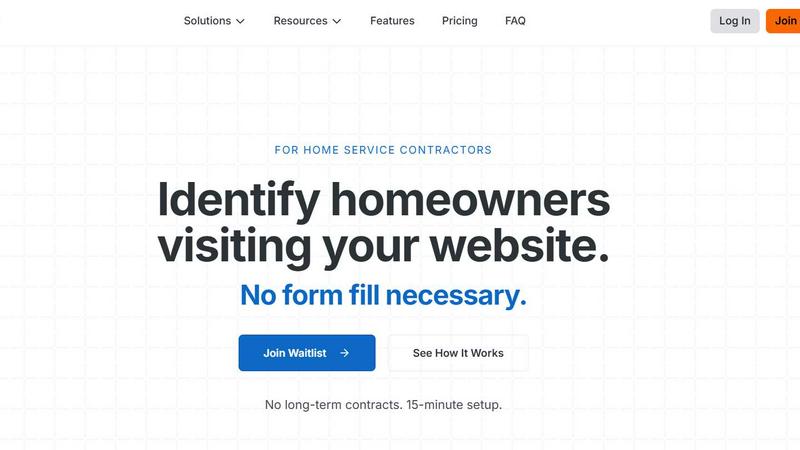
Pipeline captures anonymous website visitors' details, turning them into valuable leads without form submissions.
Last updated: February 26, 2026

qtrl.ai
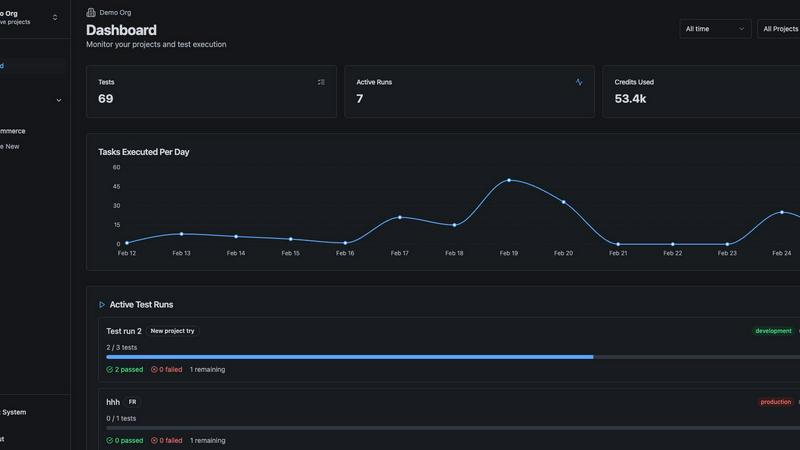
qtrl.ai scales QA with AI agents while ensuring full team control and governance.
Last updated: March 4, 2026
Visual Comparison
Pipeline
qtrl.ai
Feature Comparison
Pipeline
Visitor Identification
Pipeline's core feature is its ability to identify homeowners visiting your website without requiring any form submissions. This technology captures essential details like names, addresses, and emails, transforming anonymous traffic into verifiable leads.
Seamless CRM Integration
Pipeline integrates effortlessly with major CRMs such as ServiceTitan, HubSpot, and Jobber. This ensures that all identified leads are automatically synced to your existing systems, enabling a streamlined workflow and effective lead management.
Automated Follow-Up Actions
With Pipeline, contractors can set up automated follow-up actions that trigger as soon as leads are captured. This includes sending welcome emails, queuing postcards for delivery, and updating CRM records, which helps in nurturing leads and increasing conversion rates.
Real-Time Notifications
Pipeline offers real-time notifications through Slack and email whenever new leads are captured or matched. This feature keeps you informed about potential customers, allowing you to act promptly and effectively capitalize on new opportunities.
qtrl.ai
Enterprise-Grade Test Management
qtrl.ai provides a centralized hub for all QA activities, enabling teams to manage test cases, plans, and runs in one unified platform. It ensures full traceability from requirements to test coverage and offers detailed audit trails, making it built for compliance and auditability. The system supports both manual and automated workflows, giving teams the flexibility to structure their QA processes according to their specific needs and governance standards.
Autonomous QA Agents
The platform features powerful AI agents that execute testing instructions on demand or continuously. These agents operate within user-defined rules and execute tests in real browsers, not simulations, ensuring authentic user experience validation. They can run at scale across multiple environments, providing reliable and scalable automation that adapts to complex application landscapes without sacrificing the fidelity of the testing process.
Progressive Automation
qtrl.ai is designed for a gradual adoption curve. Teams start by writing high-level test instructions in plain English, which the platform executes precisely. When ready, they can leverage AI to generate and run tests automatically, with every step being fully reviewable and approvable. The system also proactively analyzes coverage gaps and suggests new tests, allowing automation to intelligently expand while keeping human oversight firmly in the loop.
Governance by Design
Trust and control are foundational to qtrl.ai. The platform ensures there are no black-box AI decisions, offering full visibility into agent actions. It supports configurable permission levels for autonomy, provides enterprise-ready security, and keeps all automation transparent. This governance-first approach allows teams to confidently scale their QA efforts, knowing they retain ultimate control over what tests run, what changes are made, and how they scale.
Use Cases
Pipeline
HVAC Contractors
HVAC professionals can leverage Pipeline to capture leads from website visitors who are looking for heating or cooling solutions. By identifying these visitors, contractors can reach out with tailored offers, significantly increasing their chances of booking appointments.
Plumbing Services
Plumbing companies can utilize Pipeline to recognize homeowners browsing their services online. This allows them to follow up with personalized communications, helping to convert potential clients who may not have filled out a form.
Roofing Businesses
Roofing contractors can benefit from Pipeline by identifying potential clients who visit their site to compare options. By reaching out to these leads with relevant information and offers, they can enhance their chances of securing contracts.
Electrical Services
Electricians can use Pipeline to transform anonymous site visitors into valuable leads. By capturing contact details, they can initiate targeted follow-ups, making it easier to fill their service appointments and grow their business.
qtrl.ai
Scaling Beyond Manual Testing
QA teams overwhelmed by repetitive manual test execution can use qtrl.ai to systematically introduce automation. They can start by managing manual test cases in the platform and then progressively offload execution to autonomous agents. This allows teams to increase test coverage and frequency without linearly increasing headcount, freeing human testers to focus on more complex, exploratory, and high-value testing activities.
Modernizing Legacy QA Workflows
Companies relying on outdated, siloed, or script-heavy automation frameworks can modernize their entire QA lifecycle with qtrl.ai. The platform integrates test management, automation, and AI-driven execution into a single, cohesive system. It works with existing tools and CI/CD pipelines, enabling a smooth transition from brittle, maintenance-intensive scripts to a more adaptive and intelligent QA process that delivers continuous feedback.
Ensuring Governance in Enterprise QA
Enterprises in regulated industries that require strict compliance, detailed audit trails, and traceability can leverage qtrl.ai's governance-by-design architecture. The platform provides full visibility into all test activities, maintains comprehensive audit logs, and ensures AI agents operate within strict, pre-defined rules. This allows large organizations to adopt advanced AI automation for QA without compromising on security, compliance, or control requirements.
Accelerating Product-Led Engineering
Product-led engineering teams that need to move fast while maintaining high quality can integrate qtrl.ai into their development cycle. The platform's ability to quickly generate tests from plain English descriptions and its adaptive memory that learns from the application accelerate test creation. This results in faster release cycles with greater confidence, as quality assurance keeps pace with rapid development and frequent deployments.
Overview
About Pipeline
Pipeline is an innovative lead generation tool designed specifically for home service companies. Its primary function is to identify anonymous visitors on your website, even if they do not fill out any forms. This capability allows businesses to significantly increase their pool of leads, turning casual website visitors into actionable contacts. On average, Pipeline can identify 40% of website traffic, a stark contrast to the industry average conversion rate of just 4%. By capturing the names, email addresses, and home addresses of potential customers, Pipeline enables contractors to fill their sales pipeline with more qualified leads. Additionally, Pipeline seamlessly integrates with popular CRMs, allowing users to automate follow-up communications through emails, phone calls, texts, postcards, and even door-knocking campaigns, thus maximizing the chances of converting leads into customers.
About qtrl.ai
qtrl.ai is a modern, AI-powered QA platform engineered to help software development teams scale their quality assurance efforts effectively while maintaining full control and governance. It addresses the core challenges faced by modern QA teams by uniquely combining robust, enterprise-grade test management with intelligent, trustworthy AI automation. The platform serves as a centralized command center where teams can organize test cases, plan and execute test runs, trace requirements directly to test coverage, and monitor quality through comprehensive, real-time dashboards. This structured foundation provides engineering leads and QA managers with unparalleled visibility into testing status, pass/fail rates, and potential risk areas.
qtrl.ai distinguishes itself through its progressive approach to AI. Rather than imposing a risky, fully autonomous "black-box" solution, it allows teams to adopt intelligent automation at their own pace. Teams can begin with simple manual test management and seamlessly transition to leveraging built-in autonomous agents. These agents can generate precise UI tests from plain English instructions, autonomously maintain them as the application evolves, and execute them at scale across multiple browsers and environments. This makes qtrl.ai an ideal solution for product-led engineering teams, QA groups seeking to move beyond manual processes, companies modernizing legacy workflows, and enterprises that require strict compliance and detailed audit trails. Its mission is to bridge the gap between the slow pace of manual testing and the brittle complexity of traditional scripted automation, offering a trusted, scalable path to faster and more intelligent quality assurance.
Frequently Asked Questions
Pipeline FAQ
How does Pipeline identify visitors?
Pipeline uses a simple line of code added to your website's header. This code allows the tool to track and identify visitors, capturing their names, addresses, and emails without any form submission.
What kind of businesses can benefit from Pipeline?
Pipeline is specifically designed for home service companies, including HVAC, plumbing, roofing, electrical, and landscaping services. Any business in the home service sector can leverage its capabilities to increase lead generation.
Is there a long-term contract required?
No, Pipeline does not require long-term contracts. Users can get started with a quick 15-minute setup and can opt out at any time, making it a flexible solution for contractors.
How does Pipeline help with follow-up?
Pipeline automates follow-up actions by syncing captured leads directly to your CRM. This allows you to trigger emails, schedule postcards, and update lead records without manual intervention, ensuring timely communication with potential customers.
qtrl.ai FAQ
How does qtrl.ai's AI differ from other "autonomous" testing tools?
qtrl.ai adopts a progressive, trust-first approach to AI, unlike tools that enforce a full "black-box" automation model from the start. Its AI agents operate with full transparency and within user-defined governance rules. Teams begin with manual oversight and gradually increase autonomy as the AI proves its reliability. This ensures control is never sacrificed, and all AI-generated tests and actions are fully reviewable and approvable by human team members.
Can qtrl.ai integrate with our existing development tools and pipelines?
Yes, qtrl.ai is built for real-world workflows and offers robust integration capabilities. It supports requirements management tools and seamlessly integrates with CI/CD pipelines to enable continuous testing. The platform is designed to work alongside your existing toolchain, providing continuous quality feedback loops without requiring a complete and disruptive overhaul of your current development and QA processes.
Is qtrl.ai suitable for teams that are currently only doing manual testing?
Absolutely. qtrl.ai is explicitly designed for progression, making it an ideal starting point for manual testing teams. You can begin by using its test management features to organize manual test cases and plans. When you're ready to automate, you can leverage the AI agents to execute existing manual instructions or generate new automated tests, allowing you to scale your QA efforts at your own comfortable pace.
How does qtrl.ai handle security and sensitive data during testing?
Security is a cornerstone of the platform. qtrl.ai offers enterprise-ready security protocols and a multi-environment execution system. Sensitive data like login credentials and API keys can be stored as encrypted secrets per environment. Crucially, these secrets are never exposed to the AI agents, ensuring that automated tests can run securely against staging or production environments without risking sensitive information.
Alternatives
Pipeline Alternatives
Pipeline is a powerful tool designed to identify anonymous traffic on your website, specifically catering to home service companies. By capturing potential leads who do not fill out forms, Pipeline enhances your marketing efforts, allowing you to fill your pipeline with valuable contact information. It integrates seamlessly with CRMs to streamline communication methods such as email, calls, texts, postcards, and even door knocking. Users often seek alternatives to Pipeline for various reasons, such as pricing, feature sets, or specific platform compatibility. When searching for a replacement, it's essential to consider the scalability of the solution, the range of integrations offered, and the effectiveness of its lead identification capabilities. Ultimately, finding an alternative that aligns with your business needs can significantly enhance your lead generation strategy.
qtrl.ai Alternatives
qtrl.ai is a modern QA and test automation platform designed for software development teams. It combines structured test management with intelligent AI agents to help scale quality assurance efforts while maintaining governance and control. This places it within the broader categories of automation and developer tools. Users often explore alternatives to find a solution that best fits their specific needs. Common reasons include budget constraints, the need for different feature sets like integration capabilities or reporting, or a preference for a different deployment model. The specific requirements of a team's tech stack and existing development workflow also drive the search for other options. When evaluating alternatives, key considerations include the platform's approach to AI and automation, its ease of use for both technical and non-technical team members, and the strength of its test management foundation. It's also crucial to assess scalability, security compliance, and the quality of customer support to ensure a long-term fit for your organization's quality goals.