
NanoBanana2pro vs OpenMark AI
Side-by-side comparison to help you choose the right product.

NanoBanana2pro
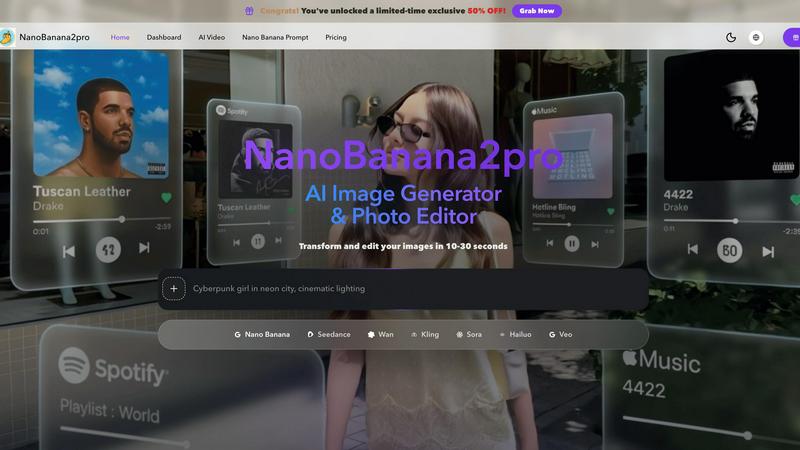
NanoBanana2pro is an AI image and video creation platform for generating and editing content across text, image, and video workflows.

OpenMark AI benchmarks over 100 LLMs on your specific task for cost, speed, quality, and stability without requiring API keys.
Last updated: March 26, 2026
Visual Comparison
NanoBanana2pro
OpenMark AI
Overview
About NanoBanana2pro
NanoBanana2pro.site is an AI image generator and photo editor that converts prompts and reference images into high-resolution visuals for ads, ad creatives, e-commerce listings, and brand assets.The platform supports prompt-based generation with a single reference image, style transfer and presets, and iterative refinement to adjust lighting, texture, and composition.
Batch generation produces multiple variations from one input for A/B testing and visual exploration, while smart assets save prompts, presets, and past generations for reproducible workflows.Outputs include photorealistic and multi-scene images optimized for publishing, advertising, and product mockups, with export options suitable for digital and print.
About OpenMark AI
OpenMark AI is a comprehensive, web-based platform designed for task-level benchmarking of Large Language Models (LLMs). It empowers developers, product teams, and AI practitioners to make data-driven decisions when selecting AI models for their applications. The core value proposition is moving beyond theoretical datasheets and marketing claims to evaluate models based on real performance for a specific task. Users describe their objective in plain language—such as data extraction, classification, or creative writing—and OpenMark AI executes the same prompts across a vast catalog of over 100 models in a single session. The platform provides a systematic comparison across critical dimensions: the scored quality of outputs, the actual cost per API request, latency, and crucially, the stability of results across multiple runs to reveal variance. This eliminates the guesswork and risk of relying on a single, potentially "lucky" output. By using a hosted credit system, it removes the friction of configuring and managing multiple API keys from providers like OpenAI, Anthropic, and Google, streamlining the pre-deployment validation process to ensure the chosen model is cost-efficient, reliable, and fit-for-purpose.