
Fallom vs Mod
Side-by-side comparison to help you choose the right product.

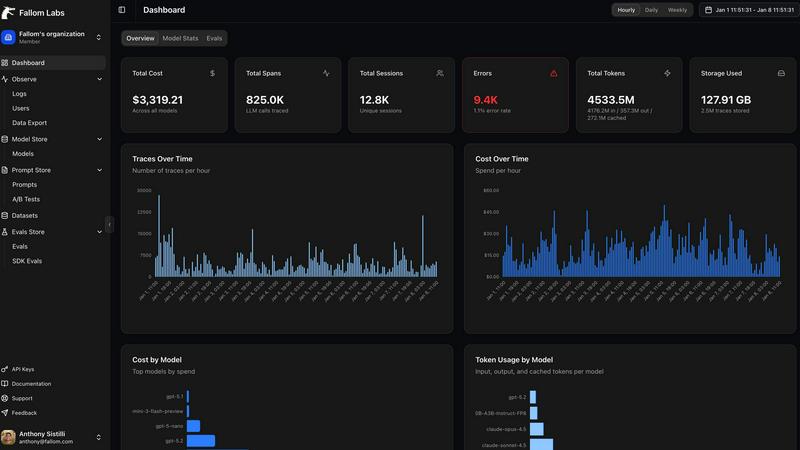
Fallom is an AI observability platform for tracking and optimizing LLM and agent operations.
Last updated: February 28, 2026

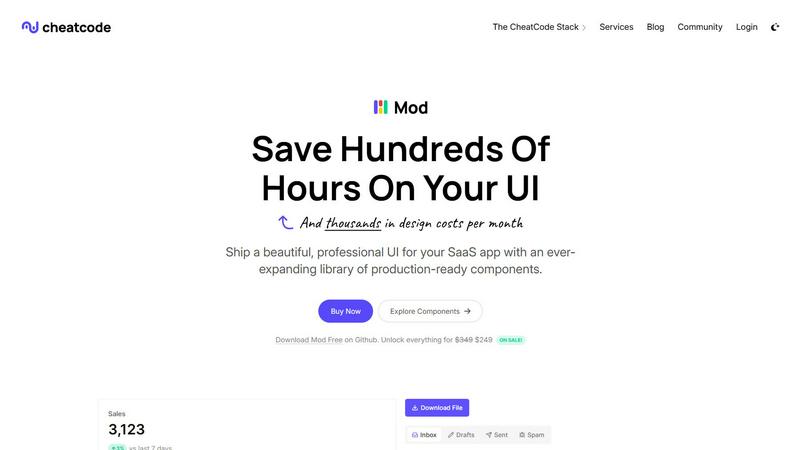
Mod is a CSS framework with prebuilt components for rapidly developing SaaS application interfaces.
Visual Comparison
Fallom
Mod
Feature Comparison
Fallom
End-to-End LLM Tracing
Fallom provides comprehensive tracing for every LLM call, capturing granular details in real-time. This includes the full prompt, model output, any function or tool calls made, token counts, latency metrics, and the calculated cost per call. This deep visibility is essential for debugging complex agentic workflows, understanding performance bottlenecks, and gaining a precise view of operational costs.
Cost Attribution and Transparency
The platform offers detailed cost tracking and attribution, breaking down spend by model, team, user, or customer. This provides full financial transparency for budgeting, forecasting, and internal chargeback processes. Teams can monitor live usage, set alerts for budget overruns, and make informed decisions about model selection based on both performance and cost-efficiency.
Compliance-Ready Audit Trails
Fallom is built for regulated industries, providing immutable, complete audit trails of every AI interaction. This includes full input/output logging, model versioning, and user consent tracking. These features are designed to help organizations meet stringent regulatory requirements such as the EU AI Act, SOC 2, and GDPR, ensuring accountability and traceability in AI operations.
Session Tracking and User Context
Group individual traces into complete user sessions to understand the full customer journey. This feature provides context for interactions, allowing teams to analyze how users engage with AI features, troubleshoot specific customer issues, and calculate the total cost-to-serve per user or account, enabling better product and support insights.
Mod
Extensive Component Library
Mod provides an extensive library of over 88 meticulously crafted, reusable UI components. This includes everything from foundational elements like buttons, forms, and modals to complex SaaS-specific modules such as data tables, pricing cards, dashboards, and user profile sections. Each component is built with accessibility and semantic HTML in mind, ensuring a solid foundation for any application. This vast selection allows developers to assemble complex interfaces quickly by combining these pre-styled building blocks, ensuring consistency and saving countless hours of development time.
Comprehensive Design System with Multiple Themes
Beyond individual components, Mod offers a complete, cohesive design system featuring 168 distinct style utilities and two fully realized themes (light and dark). This system includes a consistent spacing scale, typography hierarchy, color palette, and shadow elevations. The built-in, easy-to-implement dark mode support is a significant advantage for modern applications. This comprehensive approach guarantees that every element you use from the library works harmoniously with every other, delivering a polished and professional look right out of the box.
Framework-Agnostic & Easy Integration
A standout feature of Mod is its framework-agnostic architecture. It is designed as pure, well-structured CSS with clear class names, making it compatible with any front-end framework or backend templating system. Whether you are building with Next.js, Nuxt, Vite, SvelteKit, Ruby on Rails, Django, or plain HTML, Mod integrates seamlessly. This flexibility prevents vendor lock-in and allows teams to adopt Mod regardless of their chosen technology stack, making it a future-proof investment for any project.
Mobile-First & Fully Responsive
Every component and layout in Mod is built with a mobile-first, responsive design philosophy. The styles and components automatically adapt to provide an optimal viewing and interaction experience across a wide range of devices, from smartphones to desktop monitors. This eliminates the need for developers to write complex media queries and manually adjust layouts for different screen sizes. You can confidently build your SaaS UI knowing it will look and function perfectly for all users, regardless of how they access your application.
Use Cases
Fallom
Production Debugging and Performance Optimization
Engineering teams use Fallom to rapidly diagnose failures and latency issues in live AI applications. By examining timing waterfalls and tool call sequences, developers can pinpoint exactly where in a multi-step agent workflow a problem occurred, whether it's a slow LLM call, a failing tool, or a logic error, drastically reducing mean time to resolution (MTTR).
Financial Governance and Cost Control
Finance and engineering leadership utilize Fallom's cost attribution features to monitor and control AI expenditure. By tracking spend per model, team, or product feature, organizations can identify cost drivers, optimize expensive workflows, implement chargebacks, and ensure AI initiatives remain within budget, transforming AI costs from a black box into a manageable line item.
Regulatory Compliance and Auditing
Compliance and legal teams leverage Fallom to demonstrate adherence to AI regulations. The platform's immutable audit trails, consent tracking, and detailed logging provide the necessary evidence for audits required by standards like the EU AI Act or SOC 2. Privacy mode features also allow sensitive data to be redacted while maintaining operational telemetry.
Model Evaluation and A/B Testing
Product and ML teams employ Fallom to run evaluations, test new prompts, and safely roll out new model versions. The platform facilitates A/B testing by splitting traffic between models or prompt versions, allowing teams to compare performance, cost, and quality metrics like accuracy or hallucination rates before committing to a full production deployment.
Mod
Rapid Prototyping and MVP Development
For startups and entrepreneurs, speed to market is critical. Mod is an ideal tool for rapidly prototyping ideas and building Minimum Viable Products (MVPs). Developers can use the pre-designed components to construct a fully functional, professional-looking interface in a fraction of the time it would take to design and code from zero. This allows teams to validate their business concept with real users quickly without compromising on the perceived quality and polish of the application.
Standardizing UI Across Development Teams
In growing engineering teams, maintaining visual consistency across different features and modules developed by multiple engineers can be challenging. Mod acts as a single source of truth for the UI. By adopting Mod's design system, teams ensure that every new page, component, or feature adheres to the same spacing, typography, and color rules. This standardization improves collaboration, reduces design review cycles, and ensures a uniform user experience throughout the entire application.
Enhancing Legacy Applications with Modern UI
Many established applications have robust backend functionality but suffer from outdated or inconsistent front-end interfaces. Mod provides a perfect solution for modernizing these legacy UIs without a complete rewrite. Developers can incrementally replace old styles and components with Mod's modern, responsive ones. Since Mod works with any stack, it can be integrated into older Rails, Django, or even jQuery-based applications to give them a fresh, contemporary SaaS look and feel.
Building Internal Admin Dashboards and Tools
Companies often need to build internal tools, admin panels, or customer portals that require a clean, functional interface but don't justify the cost of a dedicated designer. Mod's component library, especially its data tables, charts, and form elements, is perfectly suited for this use case. Developers can efficiently assemble powerful internal dashboards that are both usable and professional, allowing the business to operate more effectively without diverting design resources from customer-facing products.
Overview
About Fallom
Fallom is an AI-native observability platform engineered specifically for monitoring and optimizing Large Language Model (LLM) and AI agent workloads in production environments. It provides engineering, product, and compliance teams with comprehensive, real-time visibility into every AI interaction, moving organizations from blind deployment to data-driven management of their AI applications. The platform's core value proposition is delivering end-to-end tracing for LLM calls, capturing granular details such as prompts, outputs, tool calls, token usage, latency, and per-call costs.
Built on the open standard OpenTelemetry (OTEL), Fallom offers a single, lightweight SDK that allows teams to instrument their applications in minutes, eliminating vendor lock-in. It is designed for enterprises that require scale, reliability, and compliance, featuring session-level context for user journeys, timing waterfalls for complex multi-step agents, and robust audit trails. By centralizing observability, Fallom empowers teams to debug issues faster, monitor usage live, attribute spend accurately across models and teams, and ensure their AI systems are performant, cost-effective, and compliant with regulations like the EU AI Act, SOC 2, and GDPR.
About Mod
Mod is a comprehensive, production-ready CSS framework and component library specifically engineered for building modern, polished Software-as-a-Service (SaaS) user interfaces. It provides developers with a systematic design system that eliminates the need for custom CSS from scratch, dramatically accelerating the front-end development process. The core value proposition of Mod is to empower solo developers, startups, and engineering teams to ship professional, visually cohesive, and highly functional web applications faster and with significantly reduced design overhead. By offering a vast library of pre-built, responsive components and utilities, Mod ensures that the final product maintains a high-quality, consistent aesthetic without requiring deep expertise in UI/UX design. Its framework-agnostic nature makes it a versatile tool that seamlessly integrates into virtually any modern tech stack, from JavaScript frameworks like Next.js and Svelte to backend-heavy environments like Rails and Django. With Mod, the focus shifts from wrestling with styling and layout to implementing core application logic and features.
Frequently Asked Questions
Fallom FAQ
How does Fallom integrate with my existing AI applications?
Fallom integrates via a single, lightweight OpenTelemetry (OTEL)-native SDK. You can instrument your applications in under five minutes by adding the SDK, which automatically captures traces from LLM calls, tool usage, and custom spans. Being OTEL-based, it avoids vendor lock-in and works with a wide range of LLM providers and frameworks.
Does Fallom store sensitive user data from prompts and responses?
Fallom offers a configurable Privacy Mode to address this concern. You can choose to disable full content capture for sensitive data, redact specific fields, or log only metadata (like token counts and latency) while protecting confidential information. This allows you to maintain full observability for debugging while adhering to data privacy policies.
Can Fallom track costs for different teams or projects?
Yes, detailed cost attribution is a core feature. Fallom automatically breaks down costs by the LLM model used. You can further enrich traces with custom attributes (like team ID, project name, or user ID) to slice and dice spending across any dimension, enabling precise showback/chargeback and helping teams understand their AI resource consumption.
Is Fallom suitable for large-scale enterprise deployments?
Absolutely. Fallom is engineered for enterprise-scale, reliability, and security. It handles high-volume tracing data, offers robust access controls, and provides features essential for large organizations, including comprehensive audit trails, SOC 2/GDPR-ready compliance tools, and the ability to monitor complex, multi-agent AI systems across entire product suites.
Mod FAQ
What frameworks is Mod compatible with?
Mod is completely framework-agnostic. It is built with standard CSS and uses simple class names for styling, making it compatible with any front-end or full-stack framework. This includes popular JavaScript frameworks like Next.js, Nuxt, Svelte, and Vue, build tools like Vite, and backend frameworks with templating engines like Ruby on Rails, Django, Laravel, and Phoenix. You can use it with static HTML sites as well.
Does Mod include JavaScript for interactive components?
No, Mod is primarily a CSS framework and component library. It provides the complete styles, layouts, and visual states (like hover and focus) for all 88+ components. For interactive behavior (e.g., opening a modal, toggling a dropdown, submitting a form), you will use your chosen framework's native JavaScript or a dedicated UI library. This separation of concerns gives developers maximum flexibility to implement logic in the way that best suits their project.
How is dark mode implemented with Mod?
Mod includes full, built-in support for dark mode through the use of CSS custom properties (variables) and the prefers-color-scheme media query. The framework comes with two complete themes: light and dark. By applying Mod's provided CSS classes to your root HTML element, the components will automatically switch their color palette based on the user's system preference. You can also easily implement a manual theme switcher in your application to override system settings.
What is included in the yearly updates?
Purchasing a license for Mod includes access to yearly updates, which ensure your projects stay current with modern design trends and web standards. These updates typically include new components, additional style variants, enhancements to existing components for better accessibility or performance, and updates to the underlying CSS utilities. This subscription model provides ongoing value and helps keep your SaaS UI looking fresh and competitive over time.