
MemMachine vs Storydoc
Side-by-side comparison to help you choose the right product.

MemMachine
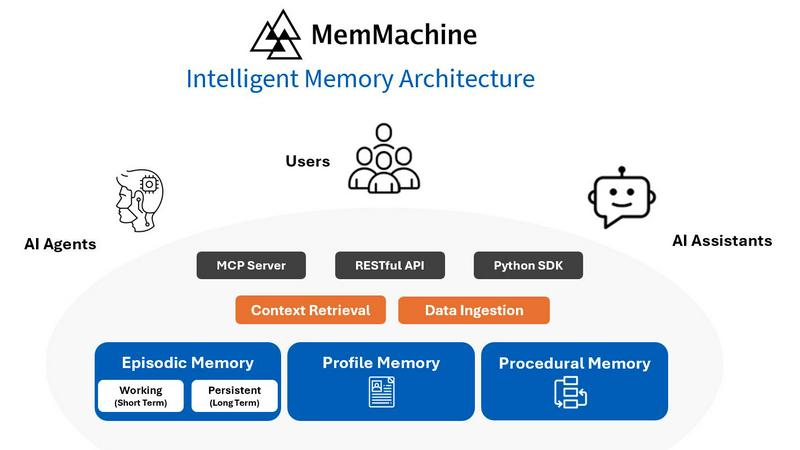
MemMachine is the open-source memory layer for building stateful, learning AI agents.
Last updated: February 28, 2026

Storydoc empowers businesses to create interactive AI presentations and documents quickly, enhancing engagement and driving results.
Last updated: March 26, 2026
Visual Comparison
MemMachine
Storydoc
Feature Comparison
MemMachine
Persistent Cross-Session Memory
MemMachine provides a robust memory infrastructure that persists user data, conversation history, and learned preferences beyond a single session. This allows AI applications to recall past interactions, eliminating the frustration of repetitive conversations and creating a seamless, continuous experience every time a user returns.
Model and Agent Agnostic Layer
The memory layer is designed to be independent of any specific AI model or agent architecture. It can store and retrieve context that works across multiple large language models (LLMs) and different AI agents, providing maximum flexibility for developers to build and evolve their applications without being locked into a single technology stack.
Sophisticated Profile Memory
MemMachine builds a detailed, evolving user profile by intelligently storing and connecting entities, preferences, and temporal data. This goes beyond simple chat history to create a rich understanding of the user, enabling the AI to anticipate needs and personalize interactions based on a deep, accumulated knowledge base.
Open-Source and Developer-Focused
As an open-source project, MemMachine offers transparency, community-driven innovation, and full control for engineering teams. It abstracts away the complexity of building a memory system while providing the flexibility to use its components independently, accelerating development of advanced, memory-powered AI applications.
Storydoc
AI Creation
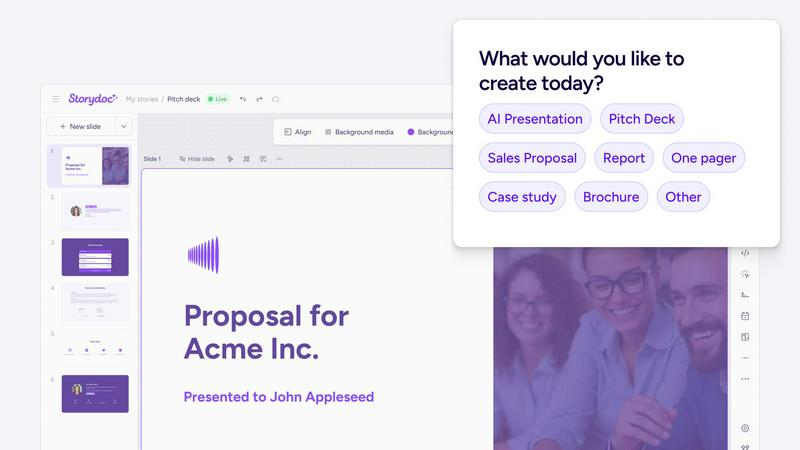
Storydoc's AI-powered creation tool allows users to generate beautifully structured documents within seconds, eliminating the need for design or writing expertise. This feature empowers users to focus on content rather than formatting, ensuring professional results every time.
Interactive & Dynamic Elements
Users can enrich their documents by embedding interactive elements like Calendly, YouTube videos, dynamic calls to action, and forms. This functionality transforms traditional documents into engaging experiences that encourage audience interaction and facilitate decision-making.
Personalization & Automation
With Storydoc, teams can create and share documents at scale using smart workflows. This feature enables the delivery of personalized content through dynamic fields and live CRM data, ensuring that every document meets the specific needs of its audience.
Deep Analytics
Storydoc provides deep analytics that track every interaction with the document, including opens, clicks, and scrolls. This data-driven approach allows users to gain insights into what engages their audience and what content may need improvement, driving better results.
Use Cases
MemMachine
Personalized Healthcare Assistants
Transform generic healthcare chatbots into compassionate, context-aware assistants. MemMachine enables the AI to remember patient histories, medication preferences, appointment patterns, and specific health concerns, allowing for proactive care management, personalized scheduling, and empathetic support that improves patient outcomes and satisfaction.
Intelligent Productivity Copilots
Build AI copilots for work environments that learn user workflows, project contexts, and communication styles. By remembering past tasks, decisions, and preferences, these assistants can provide highly relevant suggestions, automate repetitive processes, and manage information proactively, significantly boosting individual and team productivity.
Context-Aware Customer Support
Elevate customer service bots beyond scripted responses. With MemMachine, support agents can recall a customer's entire interaction history, past issues, product preferences, and sentiment. This enables faster, more accurate problem resolution and fosters customer loyalty through personalized, efficient service that demonstrates genuine understanding.
Adaptive Educational Tutors
Create personalized learning companions that remember a student's progress, knowledge gaps, learning pace, and preferred teaching methods. This long-term memory allows the tutor to adapt lessons in real-time, provide targeted reinforcement, and build upon previously mastered concepts, creating a truly customized and effective educational journey.
Storydoc
Sales Presentations
Sales teams can leverage Storydoc to create interactive presentations that captivate potential clients. By embedding multimedia and personalization, these presentations significantly increase engagement and the likelihood of closing deals.
Marketing Proposals
Marketers can utilize Storydoc to develop proposals that stand out. With the ability to embed forms and videos, proposals become more interactive, allowing clients to engage with the content actively rather than passively reading.
Corporate Reports
Companies can produce comprehensive corporate reports that are not only informative but also visually engaging. By integrating interactive storytelling elements, the reports can effectively communicate key insights and trends to stakeholders.
Training Materials
Storydoc can be used to create dynamic training materials that enhance the learning experience. Interactive elements allow for a more engaging approach, making it easier for employees to absorb information and apply what they learn.
Overview
About MemMachine
MemMachine is an open-source memory layer engineered to solve a fundamental limitation in modern AI: the lack of persistent, long-term context. It transforms standard AI agents and applications into intelligent, personalized assistants by providing a sophisticated infrastructure for learning, storing, and recalling data, preferences, and context from all past interactions. This memory persists seamlessly across multiple user sessions, different AI agents, and various underlying large language models (LLMs), building a continuously evolving and detailed user profile. Designed for developers and engineering teams building advanced AI applications, MemMachine delivers the core component for true personalization and depth. It enables the creation of context-aware assistants that understand user history, anticipate needs, and interact with remarkable precision. By moving far beyond simple, stateless question-and-answer scripts, MemMachine fosters meaningful, ongoing relationships between users and AI, unlocking a new era of intelligent and empathetic software.
About Storydoc
Storydoc is an innovative AI platform designed to revolutionize the way business professionals create, manage, and distribute presentations and documents. It automates the generation of various business materials, including proposals, pitch decks, reports, and one-pagers, transforming static files into dynamic, interactive experiences tailored for decision-makers. This tool is especially beneficial for sales and marketing teams, allowing them to embed essential elements such as forms, videos, and contracts directly into their documents. By centralizing the creation and personalization of collateral, Storydoc streamlines workflows and enhances engagement tracking, enabling teams to work efficiently and effectively. With its integration capabilities through platforms like Zapier and Make, users can pull live data to personalize content at scale, ensuring relevancy and impact. Furthermore, Storydoc prioritizes data security with its ISO 27001 compliance, GDPR adherence, and secure Single Sign-On (SSO) authentication, making it a reliable choice for businesses of all sizes.
Frequently Asked Questions
MemMachine FAQ
What is MemMachine?
MemMachine is an open-source memory layer for AI applications. It is a software infrastructure component that gives AI agents and chatbots the ability to remember information from past conversations and sessions, enabling them to provide personalized, context-aware interactions instead of starting from scratch every time.
How does MemMachine's memory work?
MemMachine's memory works by persistently storing data from user-AI interactions in a structured way. It combines various data storage techniques, including vector databases for semantic search and graph-based systems for understanding relationships between entities and events over time. This stored profile is then retrieved and used to inform future agent responses.
Who is MemMachine designed for?
MemMachine is primarily designed for developers, engineers, and product teams who are building advanced AI-powered applications. It is for teams that need to move beyond simple, stateless chatbots to create intelligent assistants, copilots, or agents that require long-term memory and deep personalization to deliver superior user experiences.
Can I try MemMachine before building with it?
Yes. You can explore MemMachine's capabilities directly through its interactive Playground. This allows you to experiment with memory functions and see how an agent with persistent context behaves compared to a standard one, providing a hands-on understanding of its value before integration.
Storydoc FAQ
What types of documents can I create with Storydoc?
With Storydoc, you can create a variety of documents including presentations, proposals, reports, and one-pagers. The platform is designed to cater to all business documentation needs, making it versatile for different use cases.
How does Storydoc ensure data security?
Storydoc prioritizes data security by adhering to ISO 27001 standards and GDPR regulations. It also offers secure Single Sign-On (SSO) authentication, ensuring that your data remains protected while you use the platform.
Can I customize the templates provided by Storydoc?
Yes, Storydoc offers a range of customizable templates that allow you to maintain brand consistency while creating documents. Users can easily adjust colors, fonts, and layouts to align with their organization's branding guidelines.
Is there a trial period available for new users?
Yes, Storydoc offers a 14-day free trial for new users with no credit card required. This allows potential users to explore the platform's features and capabilities before committing to a subscription.
Alternatives
MemMachine Alternatives
MemMachine is an open-source memory layer designed for building stateful, learning AI agents. It provides a persistent infrastructure that allows applications to remember user context, preferences, and history across sessions, moving beyond generic, stateless interactions to enable true personalization. Developers may explore alternatives for various reasons, including specific feature requirements, different deployment models, budget considerations, or integration needs with particular platforms and tools. The landscape for AI memory and agent tooling is diverse, with solutions offering varying approaches. When evaluating an alternative, key considerations include the solution's architecture for data persistence, its compatibility with your existing AI models and infrastructure, the level of control over data and deployment, and the overall developer experience for implementing and maintaining a sophisticated memory layer.
Storydoc Alternatives
Storydoc is an AI-driven platform specializing in the automation of business presentations and documents, including proposals and pitch decks. As a tool designed for marketing professionals, it transforms static content into interactive storytelling experiences, engaging decision-makers more effectively. Users often seek alternatives to Storydoc for various reasons, such as budget constraints, specific feature requirements, or compatibility with existing platforms. When looking for an alternative, it’s essential to consider factors like ease of use, the breadth of features offered, integration capabilities, and overall cost. Understanding your team's workflow and the level of personalization required can significantly influence the choice of an alternative solution.