
Image to 3D AI vs Practical AI (Practical AI for SMB)
Side-by-side comparison to help you choose the right product.

Image to 3D AI
Instantly convert any 2D image into a detailed 3D model for free with AI.
Last updated: March 1, 2026

Practical AI (Practical AI for SMB)
Practical AI provides tested guides and automation blueprints to save time for small business owners.
Last updated: April 4, 2026
Visual Comparison
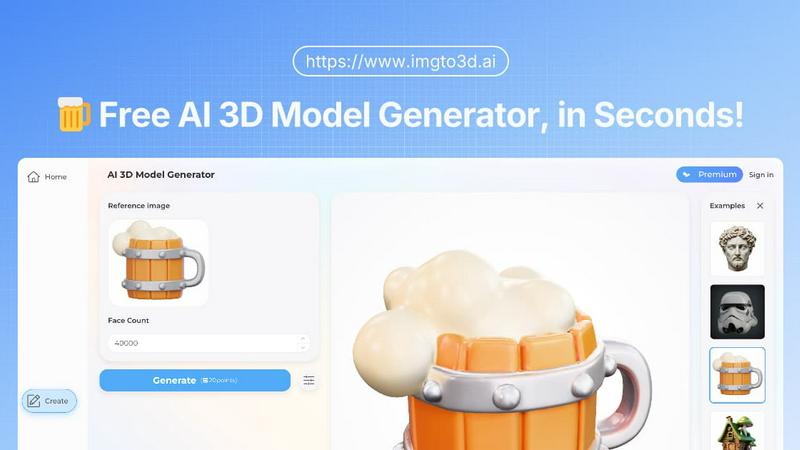
Image to 3D AI
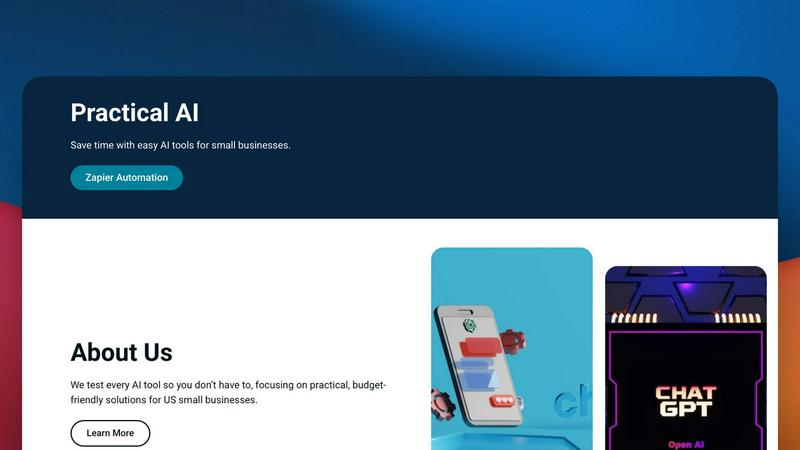
Practical AI (Practical AI for SMB)
Feature Comparison
Image to 3D AI
AI-Powered Textured Conversion
This core feature utilizes cutting-edge deep learning algorithms to automatically analyze a 2D input image and generate a detailed, textured 3D model. The AI intelligently interprets visual data to create accurate geometry and apply corresponding surface textures, transforming a flat image into a three-dimensional asset ready for use in various digital and physical applications.
Flexible Polygon Density Control
Users have precise control over the complexity of the generated 3D model by adjusting the face count, with options ranging from 5K to 40K polygons. This allows for optimizing the model based on its intended use, ensuring an optimal balance between visual detail and performance for applications like mobile gaming, VR, or 3D printing, all managed by an adaptive algorithm.
Multi-Format Export Capabilities
The platform supports exporting the generated 3D models in industry-standard formats including OBJ, GLB, and STL. This versatility ensures compatibility with most 3D software, game engines like Unity, augmented reality platforms, and 3D printing slicers, providing a seamless workflow from generation to final implementation or production.
Completely Free Tier with Instant Access
Image to 3D AI offers a permanently free tier that requires no account creation, software installation, or credit card. Users can immediately upload an image and generate a 3D model, making advanced AI technology accessible to students, hobbyists, and professionals for experimentation and light use without any financial commitment.
Practical AI (Practical AI for SMB)
Manually Tested, Real-World Guides
Every tutorial, automation blueprint, and tool review published on Practical AI is not theoretical. Each guide is manually tested in real-world business scenarios to ensure the steps are accurate, effective, and deliver the promised results. This hands-on validation provides users with confidence, saving them from the frustration of following untested or flawed online advice.
Industry-Specific Zapier Automation Blueprints
Moving beyond generic automation tips, Practical AI provides detailed, tailored blueprints for specific local service industries. This includes comprehensive guides for couriers, laundromats, landscapers, and more. These blueprints offer complete, step-by-step workflows for automating industry-specific tasks like dispatch, payment syncing, maintenance alerts, and customer communications.
Honest, Budget-Focused AI Tool Reviews
The platform offers unbiased reviews of AI tools and software, with a specific lens on value and practicality for small businesses. It cuts through marketing claims to assess whether a tool is truly user-friendly, cost-effective, and capable of delivering a strong return on investment for an SMB, helping owners avoid costly and unsuitable software choices.
Ready-to-Use Prompts & Workflows
Practical AI provides more than just concepts; it delivers immediate assets. Users get access to pre-written, optimized AI prompts for content creation and customer service, as well as fully built workflow templates for Zapier. This "copy-paste" functionality allows businesses to implement sophisticated automations and AI interactions rapidly, with minimal setup time.
Use Cases
Image to 3D AI
Game Development Asset Creation
Game developers and indie studios can rapidly prototype and produce in-game assets such as characters, props, and environmental objects. By converting concept art or reference images directly into 3D models, teams can drastically cut down production time from days to minutes, accelerating development cycles and enabling faster iteration on creative ideas.
3D Printing and Prototyping
Enthusiasts and professionals can transform photographs of objects, sculptures, or custom designs into printable 3D models. The tool's support for STL export, a standard in 3D printing, and polygon control allows for creating optimized models that preserve critical details, perfect for producing custom figurines, functional parts, or artistic creations.
XR/VR Experience Development
Creators building virtual and augmented reality experiences can quickly populate immersive worlds with high-quality 3D assets. The ability to generate and optimize models for performance is crucial for maintaining high frame rates in VR. This tool enables the rapid creation of optimized assets that ensure visual fidelity without compromising the smooth performance required in XR environments.
Digital Art and Design Portfolio Building
Artists, illustrators, and designers can effortlessly bring their 2D sketches and artwork into the third dimension. This capability allows for rapid conceptualization and iteration, enabling the creation of dynamic 3D art pieces or enhancing a portfolio with multidimensional works without needing to master complex traditional 3D modeling software.
Practical AI (Practical AI for SMB)
Automating Local Courier Operations
Courier service owners can implement the "Velocity-First" blueprint to automate their entire dispatch and delivery process. This includes setting up instant job dispatch to drivers, integrating AI for dynamic route optimization, automatically syncing proof-of-delivery (POD) documents, and triggering proactive client notifications, all leading to faster service and reduced manual coordination.
Modernizing Laundromat Management
Laundromat owners can use the "Remote Operator" blueprint to automate facility management. Workflows can be set up to send automatic machine repair alerts to technicians, sync remote payment system data, monitor energy usage, and send automated "Cycle Complete" notifications to customers, enabling efficient remote management and improved customer experience.
Streamlining Marketing & Content Creation
SMBs can leverage detailed guides and pre-built prompts to automate and enhance their marketing efforts. This includes using AI to generate SEO-optimized blog posts, social media content, and email campaigns, as well as setting up automations to schedule and publish this content, ensuring a consistent online presence without daily manual effort.
Enhancing Customer Service Efficiency
Businesses can automate initial customer service interactions to provide instant responses and triage inquiries. Guides show how to use AI chatbots for FAQs, automatically create support tickets from emails or form submissions, and set up notification systems for urgent issues, freeing up staff to handle more complex customer needs.
Overview
About Image to 3D AI
Image to 3D AI, powered by ImgTo3D.ai, is a revolutionary web-based platform that transforms the complex process of 3D modeling into a simple, instantaneous task. By leveraging advanced deep learning algorithms, it analyzes a single 2D image—be it a photograph, sketch, or drawing—to intelligently infer depth, shape, and texture, automatically generating a fully realized 3D model in seconds. This technology democratizes 3D content creation, making it accessible to a broad spectrum of users without requiring specialized skills or expensive software. The tool is designed for game developers, 3D printing enthusiasts, e-commerce managers, XR/VR producers, and digital artists. Its core value proposition lies in its unparalleled speed, extreme ease of use, and commitment to accessibility. With a completely free tier that requires no sign-up or credit card, it removes the traditional barriers to entry. For professionals needing higher throughput and advanced capabilities, the Pro tier offers stable, queue-free processing and multi-format exports. This enables faster prototyping, significant reductions in production costs, and rapid iteration on creative concepts, ultimately defining a new standard for efficiency in modern 3D workflows.
About Practical AI (Practical AI for SMB)
Practical AI (Practical AI for SMB) is a dedicated resource hub and expert guide specifically designed for US small and medium-sized businesses. Its core mission is to cut through the overwhelming hype surrounding artificial intelligence and deliver actionable, tested information. The platform focuses on providing clear, step-by-step guides and honest reviews that demonstrate how to leverage accessible AI tools (like ChatGPT and Claude) and no-code automation platforms (primarily Zapier) to solve real business problems. The content is meticulously created and manually tested in real-world scenarios by automation specialist Aapt Dubey, who brings direct experience from building over 800 workflows. The primary value proposition is enabling SMB owners and operators to automate repetitive tasks, streamline operations, enhance marketing efforts, and significantly boost overall efficiency without requiring technical expertise, a dedicated IT department, or a large budget. It serves as a trusted filter and practical instructor, transforming complex technological potential into simple, executable strategies for growth and time savings.
Frequently Asked Questions
Image to 3D AI FAQ
Is Image to 3D AI really free to use?
Yes, Image to 3D AI offers a completely free tier that requires no sign-up, credit card, or software download. You can upload an image and generate a 3D model immediately. Free users have access to core functionality, though they may encounter processing queues during peak usage times to ensure service quality for all users.
What image formats are supported for upload?
The platform accepts common image file formats including JPG, PNG, and WebP. For best results, it is recommended to use clear, well-lit images focused on a single subject or object, as this provides the AI with the most accurate visual information to interpret depth and form effectively.
What 3D file formats can I export my model in?
The generated 3D models can be exported in several widely-used formats. The free tier typically provides downloads in OBJ format. Pro tier users gain access to additional export options including GLB (for web and real-time applications) and STL (for 3D printing), offering greater flexibility for professional workflows.
Who is the Pro tier designed for?
The Pro tier is designed for professionals and power users who require consistent, high-volume access. It provides stable, queue-free processing, faster generation times, advanced export formats (OBJ, GLB, STL), and textured model outputs. This is ideal for game studios, 3D printing businesses, XR production teams, and any creator needing reliable integration into a production pipeline.
Practical AI (Practical AI for SMB) FAQ
Who is the creator behind Practical AI?
Practical AI was created by Aapt Dubey, a lead automation specialist and founder with direct, hands-on experience building over 800 automation workflows for businesses. This extensive practical background ensures the advice and guides are grounded in real-world application and effectiveness, not just theory.
Do I need technical skills to use these guides?
No technical skills or coding knowledge are required. The core philosophy of Practical AI is to make automation and AI accessible to everyone. Guides are written as clear, step-by-step instructions using no-code platforms like Zapier and user-friendly AI tools, designed specifically for business owners and operators without a technical background.
What makes Practical AI different from other AI blogs?
Practical AI differentiates itself through its strict focus on US SMBs, its manual real-world testing of every guide, and its provision of industry-specific automation blueprints. Instead of generic news or hype, it provides immediately actionable, budget-conscious, and tested solutions for defined business problems in specific verticals.
Are the tool recommendations and links sponsored?
Transparency is key. Practical AI has a clear Affiliate Disclosure policy. While some links may be affiliate links that provide a commission, all tool reviews and recommendations are based on honest, hands-on testing. The primary goal is to recommend tools that offer genuine value and utility for small businesses.
Alternatives
Image to 3D AI Alternatives
Image to 3D AI is a specialized AI assistant that instantly converts 2D images into textured 3D models. It automates the complex process of 3D modeling, making it accessible for creators of all skill levels through a fast, web-based platform. Users often explore alternatives for various reasons. These can include specific budget constraints, the need for different export formats or integration with other software, or a requirement for more advanced manual editing tools that go beyond automated generation. Platform compatibility, such as needing a desktop application versus a web service, is another common factor. When evaluating other tools, consider the core workflow. Key aspects include the quality and control over the generated 3D geometry, the supported file formats for export, the pricing model and any usage limits, and the overall ease of use. The best choice depends on balancing these factors with your specific project requirements and technical expertise.
Practical AI (Practical AI for SMB) Alternatives
Practical AI (Practical AI for SMB) is a specialized resource hub in the AI assistants and automation guidance category. It provides manually tested, step-by-step guides and workflows to help small and medium-sized businesses implement AI and no-code automation for tasks like marketing, customer service, and operations without technical expertise. Users may explore alternatives for various reasons. Some seek different pricing models or subscription structures. Others might need guidance tailored to a specific industry niche not covered, or prefer a different content format, such as video tutorials over written guides. Platform-specific needs, like a focus on a particular AI tool, can also drive the search. When evaluating an alternative, consider the depth and practicality of the content. Look for resources that offer proven, real-world examples and clear instructions. The credibility of the creators, based on hands-on experience, is crucial. Finally, ensure the alternative's scope aligns with your business's specific automation goals and the tools you already use or plan to adopt.