
Agent to Agent Testing Platform vs Image to 3D AI
Side-by-side comparison to help you choose the right product.

Agent to Agent Testing Platform
The Agent to Agent Testing Platform evaluates AI agents across multiple modalities to ensure compliance and mitigate.
Last updated: February 26, 2026

Image to 3D AI
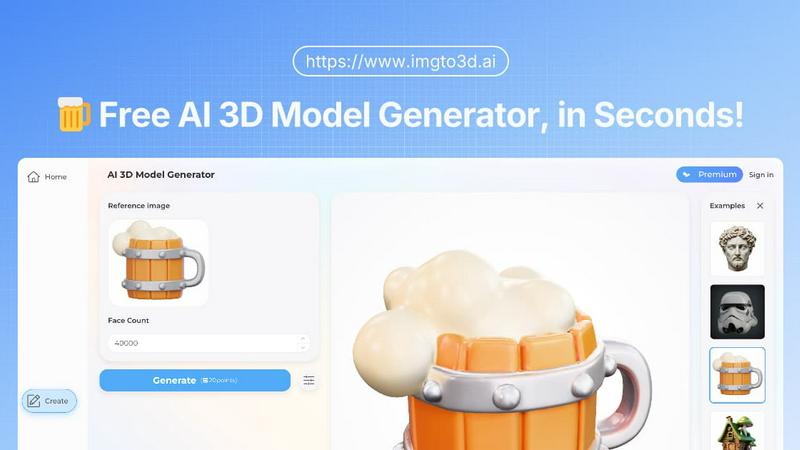
Instantly convert any 2D image into a detailed 3D model for free with AI.
Last updated: March 1, 2026
Visual Comparison
Agent to Agent Testing Platform
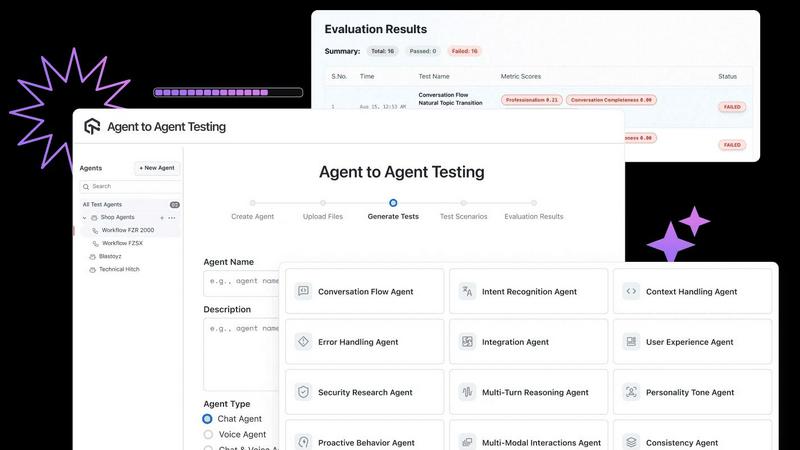
Image to 3D AI
Feature Comparison
Agent to Agent Testing Platform
Automated Scenario Generation
This feature allows for the creation of diverse and dynamic test cases that simulate chat, voice, and phone interactions for AI agents. Automated scenario generation ensures that testing encompasses a wide array of potential user interactions, increasing reliability.
True Multi-Modal Understanding
The platform supports multi-modal testing by allowing users to define detailed requirements and upload various input formats, including images, audio, and video. This capability mirrors real-world scenarios, enabling a comprehensive assessment of AI agents beyond just text interactions.
Autonomous Test Scenario Generation
With access to a library of hundreds of predefined scenarios, users can also create custom scenarios tailored to specific needs. This feature helps assess AI agents across various roles, such as personality tone and intent recognition, ensuring they perform as intended in diverse contexts.
Regression Testing with Risk Scoring
The platform offers end-to-end regression testing with insights into risk scoring, which highlights potential areas of concern. This feature enables testers to prioritize critical issues effectively, optimizing testing efforts and ensuring that the AI agents maintain their quality over time.
Image to 3D AI
AI-Powered Textured Conversion
This core feature utilizes cutting-edge deep learning algorithms to automatically analyze a 2D input image and generate a detailed, textured 3D model. The AI intelligently interprets visual data to create accurate geometry and apply corresponding surface textures, transforming a flat image into a three-dimensional asset ready for use in various digital and physical applications.
Flexible Polygon Density Control
Users have precise control over the complexity of the generated 3D model by adjusting the face count, with options ranging from 5K to 40K polygons. This allows for optimizing the model based on its intended use, ensuring an optimal balance between visual detail and performance for applications like mobile gaming, VR, or 3D printing, all managed by an adaptive algorithm.
Multi-Format Export Capabilities
The platform supports exporting the generated 3D models in industry-standard formats including OBJ, GLB, and STL. This versatility ensures compatibility with most 3D software, game engines like Unity, augmented reality platforms, and 3D printing slicers, providing a seamless workflow from generation to final implementation or production.
Completely Free Tier with Instant Access
Image to 3D AI offers a permanently free tier that requires no account creation, software installation, or credit card. Users can immediately upload an image and generate a 3D model, making advanced AI technology accessible to students, hobbyists, and professionals for experimentation and light use without any financial commitment.
Use Cases
Agent to Agent Testing Platform
Enhancing Chatbot Performance
Enterprises can utilize this platform to systematically evaluate their chatbots across multiple scenarios, ensuring they handle user interactions effectively and meet performance benchmarks related to engagement and satisfaction.
Validating Voice Assistants
Organizations developing voice assistants can leverage the multi-modal understanding feature to test voice interactions. This ensures that the assistant responds accurately and appropriately across various contexts, enhancing user trust and usability.
Testing Hybrid AI Agents
This platform is particularly useful for testing hybrid AI agents that operate across different channels. By simulating diverse user interactions, businesses can ensure consistency in performance regardless of the platform being used.
Ensuring Compliance and Ethical Standards
The Agent to Agent Testing Platform can help organizations assess AI agents for compliance with ethical standards by evaluating metrics such as bias and toxicity. This process is crucial for maintaining brand integrity and trust in AI technologies.
Image to 3D AI
Game Development Asset Creation
Game developers and indie studios can rapidly prototype and produce in-game assets such as characters, props, and environmental objects. By converting concept art or reference images directly into 3D models, teams can drastically cut down production time from days to minutes, accelerating development cycles and enabling faster iteration on creative ideas.
3D Printing and Prototyping
Enthusiasts and professionals can transform photographs of objects, sculptures, or custom designs into printable 3D models. The tool's support for STL export, a standard in 3D printing, and polygon control allows for creating optimized models that preserve critical details, perfect for producing custom figurines, functional parts, or artistic creations.
XR/VR Experience Development
Creators building virtual and augmented reality experiences can quickly populate immersive worlds with high-quality 3D assets. The ability to generate and optimize models for performance is crucial for maintaining high frame rates in VR. This tool enables the rapid creation of optimized assets that ensure visual fidelity without compromising the smooth performance required in XR environments.
Digital Art and Design Portfolio Building
Artists, illustrators, and designers can effortlessly bring their 2D sketches and artwork into the third dimension. This capability allows for rapid conceptualization and iteration, enabling the creation of dynamic 3D art pieces or enhancing a portfolio with multidimensional works without needing to master complex traditional 3D modeling software.
Overview
About Agent to Agent Testing Platform
Agent to Agent Testing Platform is a pioneering AI-native quality and assurance framework tailored specifically for validating the behavior of AI agents in real-world scenarios. As AI systems grow more autonomous and complex, traditional quality assurance methods designed for static software become inadequate. This platform transcends basic prompt-level evaluations, providing comprehensive assessments of multi-turn conversations across various mediums, including chat, voice, and phone interactions. It is ideal for enterprises aiming to ensure their AI agents are reliable and effective before deployment. The platform facilitates detailed analysis of critical metrics such as bias, toxicity, and hallucination, enabling organizations to mitigate risks and enhance user experience.
About Image to 3D AI
Image to 3D AI, powered by ImgTo3D.ai, is a revolutionary web-based platform that transforms the complex process of 3D modeling into a simple, instantaneous task. By leveraging advanced deep learning algorithms, it analyzes a single 2D image—be it a photograph, sketch, or drawing—to intelligently infer depth, shape, and texture, automatically generating a fully realized 3D model in seconds. This technology democratizes 3D content creation, making it accessible to a broad spectrum of users without requiring specialized skills or expensive software. The tool is designed for game developers, 3D printing enthusiasts, e-commerce managers, XR/VR producers, and digital artists. Its core value proposition lies in its unparalleled speed, extreme ease of use, and commitment to accessibility. With a completely free tier that requires no sign-up or credit card, it removes the traditional barriers to entry. For professionals needing higher throughput and advanced capabilities, the Pro tier offers stable, queue-free processing and multi-format exports. This enables faster prototyping, significant reductions in production costs, and rapid iteration on creative concepts, ultimately defining a new standard for efficiency in modern 3D workflows.
Frequently Asked Questions
Agent to Agent Testing Platform FAQ
What types of AI agents can be tested with this platform?
The Agent to Agent Testing Platform supports various AI agents, including chatbots, voice assistants, and phone caller agents, across multiple interaction scenarios.
How does automated scenario generation work?
Automated scenario generation utilizes algorithms to create diverse test cases that simulate real-world interactions, ensuring a comprehensive assessment of AI agent performance in various situations.
Can I integrate the platform with existing CI/CD tools?
Yes, the platform seamlessly integrates with existing CI/CD tools, allowing for large-scale cloud execution and efficient management of test scenarios.
What metrics can be measured during testing?
Key metrics that can be evaluated include bias, toxicity, hallucination, effectiveness, accuracy, empathy, and professionalism, providing a holistic view of AI agent performance.
Image to 3D AI FAQ
Is Image to 3D AI really free to use?
Yes, Image to 3D AI offers a completely free tier that requires no sign-up, credit card, or software download. You can upload an image and generate a 3D model immediately. Free users have access to core functionality, though they may encounter processing queues during peak usage times to ensure service quality for all users.
What image formats are supported for upload?
The platform accepts common image file formats including JPG, PNG, and WebP. For best results, it is recommended to use clear, well-lit images focused on a single subject or object, as this provides the AI with the most accurate visual information to interpret depth and form effectively.
What 3D file formats can I export my model in?
The generated 3D models can be exported in several widely-used formats. The free tier typically provides downloads in OBJ format. Pro tier users gain access to additional export options including GLB (for web and real-time applications) and STL (for 3D printing), offering greater flexibility for professional workflows.
Who is the Pro tier designed for?
The Pro tier is designed for professionals and power users who require consistent, high-volume access. It provides stable, queue-free processing, faster generation times, advanced export formats (OBJ, GLB, STL), and textured model outputs. This is ideal for game studios, 3D printing businesses, XR production teams, and any creator needing reliable integration into a production pipeline.
Alternatives
Agent to Agent Testing Platform Alternatives
Agent to Agent Testing Platform is a pioneering AI-native quality assurance framework that validates the behavior of AI agents across various communication channels, including chat, voice, and phone. This innovative platform is essential in a landscape where AI systems are increasingly autonomous and complex, making traditional quality assurance models inadequate. Users often seek alternatives due to factors such as pricing, specific feature sets, or particular platform requirements that better align with their business needs. When considering alternatives, it is crucial to evaluate the specific functionalities offered, the scalability of the solution, and the overall user experience. Look for platforms that provide comprehensive testing capabilities, ensuring thorough validation of AI agent interactions in real-world scenarios. Prioritizing flexibility and adaptability to suit unique operational demands will also be essential in your decision-making process.
Image to 3D AI Alternatives
Image to 3D AI is a specialized AI assistant that instantly converts 2D images into textured 3D models. It automates the complex process of 3D modeling, making it accessible for creators of all skill levels through a fast, web-based platform. Users often explore alternatives for various reasons. These can include specific budget constraints, the need for different export formats or integration with other software, or a requirement for more advanced manual editing tools that go beyond automated generation. Platform compatibility, such as needing a desktop application versus a web service, is another common factor. When evaluating other tools, consider the core workflow. Key aspects include the quality and control over the generated 3D geometry, the supported file formats for export, the pricing model and any usage limits, and the overall ease of use. The best choice depends on balancing these factors with your specific project requirements and technical expertise.