
diffray vs qtrl.ai
Side-by-side comparison to help you choose the right product.

diffray
Diffray uses AI agents to catch real bugs in your code, not just nitpicks.
Last updated: February 28, 2026

qtrl.ai
qtrl.ai scales QA with AI agents while ensuring full team control and governance.
Last updated: March 4, 2026
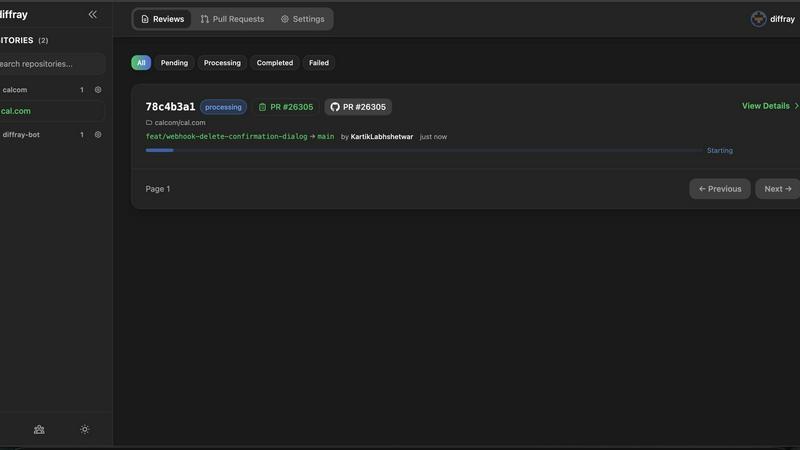
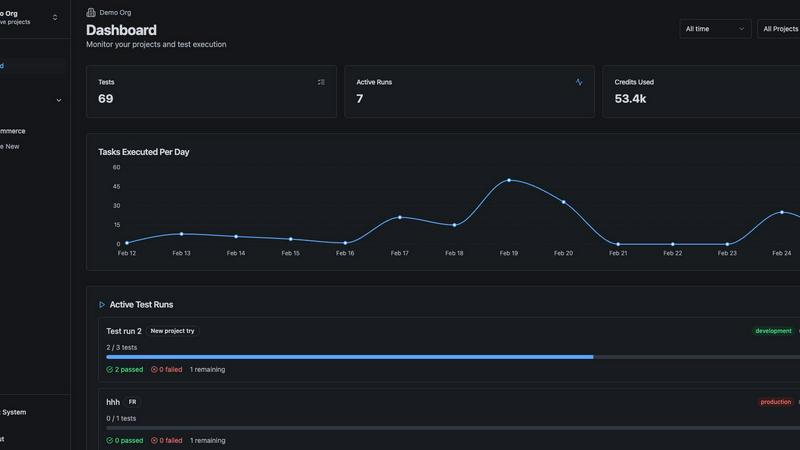
Visual Comparison
diffray
qtrl.ai
Feature Comparison
diffray
Multi-Agent AI Architecture
Unlike single-model AI tools that provide generalized feedback, diffray employs a team of over 30 specialized AI agents. Each agent is fine-tuned for a specific domain, such as detecting security flaws like SQL injection, identifying performance anti-patterns, spotting common bug categories, or enforcing framework-specific best practices. This division of labor ensures deep, expert-level analysis across every facet of your code, leading to more accurate and comprehensive reviews than a monolithic AI could provide.
Codebase-Aware Contextual Analysis
diffray does not review code changes in isolation. It intelligently analyzes pull requests within the full context of your entire repository. This includes understanding the existing codebase architecture, historical patterns, and previous decisions. This context-awareness prevents irrelevant suggestions and ensures feedback is practical and directly applicable to your project's unique environment, significantly reducing false positives and increasing developer trust in the AI's recommendations.
Actionable and Precise Feedback
The platform is designed to eliminate noise. By leveraging its multi-agent system and contextual understanding, diffray generates concise, highly actionable feedback that developers can immediately use to improve their code. Instead of vague warnings, it provides specific, justified recommendations with clear explanations, often including code snippets or direct links to problematic lines. This precision transforms AI review from a curiosity into a reliable, time-saving partner in the development workflow.
Seamless Platform Integration
diffray is built for easy adoption within existing developer workflows. It integrates directly and seamlessly with popular Git hosting services including GitHub, GitLab, and Bitbucket. The setup process is straightforward, allowing teams to connect their repositories and start receiving intelligent code reviews within minutes, without disrupting their current tools or processes. This frictionless integration is key to enabling widespread team usage and realizing the platform's productivity benefits.
qtrl.ai
Enterprise-Grade Test Management
qtrl.ai provides a centralized hub for all QA activities, enabling teams to manage test cases, plans, and runs in one unified platform. It ensures full traceability from requirements to test coverage and offers detailed audit trails, making it built for compliance and auditability. The system supports both manual and automated workflows, giving teams the flexibility to structure their QA processes according to their specific needs and governance standards.
Autonomous QA Agents
The platform features powerful AI agents that execute testing instructions on demand or continuously. These agents operate within user-defined rules and execute tests in real browsers, not simulations, ensuring authentic user experience validation. They can run at scale across multiple environments, providing reliable and scalable automation that adapts to complex application landscapes without sacrificing the fidelity of the testing process.
Progressive Automation
qtrl.ai is designed for a gradual adoption curve. Teams start by writing high-level test instructions in plain English, which the platform executes precisely. When ready, they can leverage AI to generate and run tests automatically, with every step being fully reviewable and approvable. The system also proactively analyzes coverage gaps and suggests new tests, allowing automation to intelligently expand while keeping human oversight firmly in the loop.
Governance by Design
Trust and control are foundational to qtrl.ai. The platform ensures there are no black-box AI decisions, offering full visibility into agent actions. It supports configurable permission levels for autonomy, provides enterprise-ready security, and keeps all automation transparent. This governance-first approach allows teams to confidently scale their QA efforts, knowing they retain ultimate control over what tests run, what changes are made, and how they scale.
Use Cases
diffray
Accelerating Pull Request Reviews for Engineering Teams
Development teams can integrate diffray to automatically review every pull request. The AI agents act as a first-pass reviewer, catching common bugs, security issues, and style violations before human reviewers engage. This reduces the cognitive load on senior developers, shortens review cycles from an average of 45 minutes to just 12 minutes per week, and allows teams to merge high-quality code faster, accelerating overall development velocity and release cycles.
Enhancing Code Security and Compliance
Security teams and developers responsible for maintaining secure codebases use diffray as a proactive security guardrail. The dedicated security agents continuously scan code changes for vulnerabilities like hard-coded secrets, injection flaws, and insecure dependencies within the context of the application. This provides an automated, consistent layer of security review that helps prevent critical issues from being introduced into production, aiding in compliance with security standards.
Onboarding and Mentoring Junior Developers
diffray serves as an always-available mentor for junior developers or engineers new to a codebase. By providing instant, contextual feedback on best practices, architectural patterns, and project-specific conventions, it helps them learn and adhere to team standards more quickly. This reduces the review burden on senior team members while improving the quality and consistency of code contributed by less experienced developers, fostering better skill development.
Maintaining Code Quality in Legacy Systems
Teams working with large or legacy codebases use diffray to manage technical debt and ensure new changes don't degrade system stability. The codebase-aware analysis understands the existing (potentially complex) architecture, allowing diffray to suggest improvements that are compatible with the current system while gently guiding refactoring efforts. It helps prevent the introduction of new anti-patterns and performance bottlenecks into fragile systems.
qtrl.ai
Scaling Beyond Manual Testing
QA teams overwhelmed by repetitive manual test execution can use qtrl.ai to systematically introduce automation. They can start by managing manual test cases in the platform and then progressively offload execution to autonomous agents. This allows teams to increase test coverage and frequency without linearly increasing headcount, freeing human testers to focus on more complex, exploratory, and high-value testing activities.
Modernizing Legacy QA Workflows
Companies relying on outdated, siloed, or script-heavy automation frameworks can modernize their entire QA lifecycle with qtrl.ai. The platform integrates test management, automation, and AI-driven execution into a single, cohesive system. It works with existing tools and CI/CD pipelines, enabling a smooth transition from brittle, maintenance-intensive scripts to a more adaptive and intelligent QA process that delivers continuous feedback.
Ensuring Governance in Enterprise QA
Enterprises in regulated industries that require strict compliance, detailed audit trails, and traceability can leverage qtrl.ai's governance-by-design architecture. The platform provides full visibility into all test activities, maintains comprehensive audit logs, and ensures AI agents operate within strict, pre-defined rules. This allows large organizations to adopt advanced AI automation for QA without compromising on security, compliance, or control requirements.
Accelerating Product-Led Engineering
Product-led engineering teams that need to move fast while maintaining high quality can integrate qtrl.ai into their development cycle. The platform's ability to quickly generate tests from plain English descriptions and its adaptive memory that learns from the application accelerate test creation. This results in faster release cycles with greater confidence, as quality assurance keeps pace with rapid development and frequent deployments.
Overview
About diffray
diffray is a next-generation, AI-powered code review platform engineered to solve the core frustrations of modern development teams: noisy, ineffective feedback and missed critical issues. It moves beyond the limitations of traditional single-model AI tools by implementing a sophisticated multi-agent architecture. This system deploys over 30 specialized AI agents, each an expert in a distinct domain such as security vulnerabilities, performance bottlenecks, bug patterns, coding best practices, and even SEO considerations for relevant code. This targeted, domain-specific approach allows diffray to conduct deep, contextual investigations into code changes, replacing generic and speculative suggestions with highly precise, actionable feedback. Crucially, diffray is codebase-aware. It analyzes pull requests and commits within the full context of your repository's existing code, architecture, and historical decisions, ensuring recommendations are relevant and practical. The primary value proposition is a dramatic increase in developer productivity and code quality. diffray aims to reduce the average PR review time from 45 minutes to just 12 minutes per week by filtering out noise and providing trustworthy insights, allowing developers to focus on logic and innovation. It is built for development teams of all sizes who are serious about improving their code security, performance, and maintainability without sacrificing velocity. The platform integrates seamlessly with GitHub, GitLab, and Bitbucket.
About qtrl.ai
qtrl.ai is a modern, AI-powered QA platform engineered to help software development teams scale their quality assurance efforts effectively while maintaining full control and governance. It addresses the core challenges faced by modern QA teams by uniquely combining robust, enterprise-grade test management with intelligent, trustworthy AI automation. The platform serves as a centralized command center where teams can organize test cases, plan and execute test runs, trace requirements directly to test coverage, and monitor quality through comprehensive, real-time dashboards. This structured foundation provides engineering leads and QA managers with unparalleled visibility into testing status, pass/fail rates, and potential risk areas.
qtrl.ai distinguishes itself through its progressive approach to AI. Rather than imposing a risky, fully autonomous "black-box" solution, it allows teams to adopt intelligent automation at their own pace. Teams can begin with simple manual test management and seamlessly transition to leveraging built-in autonomous agents. These agents can generate precise UI tests from plain English instructions, autonomously maintain them as the application evolves, and execute them at scale across multiple browsers and environments. This makes qtrl.ai an ideal solution for product-led engineering teams, QA groups seeking to move beyond manual processes, companies modernizing legacy workflows, and enterprises that require strict compliance and detailed audit trails. Its mission is to bridge the gap between the slow pace of manual testing and the brittle complexity of traditional scripted automation, offering a trusted, scalable path to faster and more intelligent quality assurance.
Frequently Asked Questions
diffray FAQ
How does diffray differ from other AI coding assistants?
diffray is fundamentally different due to its multi-agent, codebase-aware architecture. While most AI assistants use a single general-purpose model to comment on code, diffray deploys a team of over 30 specialized agents, each an expert in a specific domain like security or performance. Furthermore, it reviews code within the full context of your repository, not just the changed lines. This results in far more accurate, relevant, and actionable feedback with significantly fewer false positives.
What Git platforms does diffray integrate with?
diffray offers seamless, native integrations with the three major Git hosting platforms: GitHub, GitLab, and Bitbucket. You can connect your repositories from any of these services directly to diffray. The integration typically involves installing a diffray app or bot into your organization/workspace, which then automatically reviews pull requests or specific branches as configured, posting feedback directly into the PR thread.
Is there a free plan available?
Yes, diffray offers a free plan specifically designed to support open-source projects. This allows maintainers of public repositories to leverage the platform's advanced code review capabilities at no cost. For private repositories used by teams and companies, diffray provides a straightforward trial process so you can evaluate its effectiveness within your private codebase before committing to a paid subscription.
How does diffray handle the privacy and security of my code?
Security and privacy are paramount. diffray is designed with enterprise-grade security practices. When analyzing your code, it processes the data securely and does not use your proprietary code to train its underlying AI models. You retain full ownership of your code. It is recommended to review diffray's specific security whitepaper and privacy policy for detailed information on data handling, encryption, and compliance standards.
qtrl.ai FAQ
How does qtrl.ai's AI differ from other "autonomous" testing tools?
qtrl.ai adopts a progressive, trust-first approach to AI, unlike tools that enforce a full "black-box" automation model from the start. Its AI agents operate with full transparency and within user-defined governance rules. Teams begin with manual oversight and gradually increase autonomy as the AI proves its reliability. This ensures control is never sacrificed, and all AI-generated tests and actions are fully reviewable and approvable by human team members.
Can qtrl.ai integrate with our existing development tools and pipelines?
Yes, qtrl.ai is built for real-world workflows and offers robust integration capabilities. It supports requirements management tools and seamlessly integrates with CI/CD pipelines to enable continuous testing. The platform is designed to work alongside your existing toolchain, providing continuous quality feedback loops without requiring a complete and disruptive overhaul of your current development and QA processes.
Is qtrl.ai suitable for teams that are currently only doing manual testing?
Absolutely. qtrl.ai is explicitly designed for progression, making it an ideal starting point for manual testing teams. You can begin by using its test management features to organize manual test cases and plans. When you're ready to automate, you can leverage the AI agents to execute existing manual instructions or generate new automated tests, allowing you to scale your QA efforts at your own comfortable pace.
How does qtrl.ai handle security and sensitive data during testing?
Security is a cornerstone of the platform. qtrl.ai offers enterprise-ready security protocols and a multi-environment execution system. Sensitive data like login credentials and API keys can be stored as encrypted secrets per environment. Crucially, these secrets are never exposed to the AI agents, ensuring that automated tests can run securely against staging or production environments without risking sensitive information.
Alternatives
diffray Alternatives
diffray is a next-generation AI-powered code review platform in the development tools category. It uses a multi-agent architecture to provide deep, contextual analysis of code changes, focusing on catching real bugs and security issues rather than generating generic nitpicks. Users may explore alternatives for various reasons, such as budget constraints, specific feature requirements not covered by a particular tool, or the need for integration with a different development platform or version control system. The search for the right tool is often driven by the unique workflow and technical stack of a team. When evaluating alternatives, key considerations include the depth and accuracy of the analysis, the tool's ability to understand your full codebase context, integration capabilities with your existing development environment, and the overall value in terms of reducing review time and improving code quality. The goal is to find a solution that effectively balances powerful automation with actionable, relevant feedback for your developers.
qtrl.ai Alternatives
qtrl.ai is a modern QA and test automation platform designed for software development teams. It combines structured test management with intelligent AI agents to help scale quality assurance efforts while maintaining governance and control. This places it within the broader categories of automation and developer tools. Users often explore alternatives to find a solution that best fits their specific needs. Common reasons include budget constraints, the need for different feature sets like integration capabilities or reporting, or a preference for a different deployment model. The specific requirements of a team's tech stack and existing development workflow also drive the search for other options. When evaluating alternatives, key considerations include the platform's approach to AI and automation, its ease of use for both technical and non-technical team members, and the strength of its test management foundation. It's also crucial to assess scalability, security compliance, and the quality of customer support to ensure a long-term fit for your organization's quality goals.