
CalcFi vs CrabClear
Side-by-side comparison to help you choose the right product.

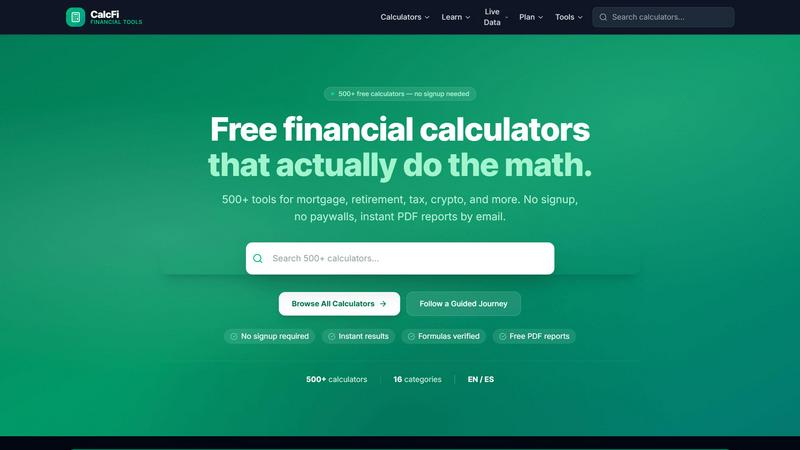
CalcFi
500+ free financial calculators — mortgage, compound interest, retirement, salary, tax, debt, investing & more. No signup, instant results.

CrabClear ensures your privacy by removing your data from over 1,500 brokers, protecting you from spam and identity.
Last updated: March 1, 2026
Visual Comparison
CalcFi
CrabClear

Overview
About CalcFi
CalcFi is a free, no-signup financial calculator platform with 500+ tools covering mortgage payments, compound interest, retirement savings, salary/paycheck, tax brackets, debt payoff, investment returns, budgeting, net worth, and more. State-specific data for all 50 US states. Dark-mode UI, mobile-first, instant results. Built with Next.js, deployed on Vercel.
About CrabClear
CrabClear is a revolutionary data deletion service designed to safeguard your privacy by effectively removing personal information from over 1,500 data brokers, significantly surpassing the 420 brokers typically addressed by other services. Many people are unaware that data brokers collect and sell sensitive information such as contact details, financial data, and personal beliefs. This information can lead to unwanted spam, targeted scams, and even identity theft. CrabClear addresses these concerns by providing users with four times the coverage compared to competitors, ensuring continuous updates and global reach. Unlike many US-based services, CrabClear adheres to EU regulations, fully complying with GDPR to protect users from intrusive US surveillance. The service is priced at a straightforward €79 per year, with attractive discounts for early subscribers and a risk-free 30-day money-back guarantee. Setting up the service is simple: users need to sign up, after which CrabClear initiates removal requests to the specified brokers, allowing users to track the progress through a real-time dashboard. With CrabClear, users can enjoy fewer spam calls, reduced junk mail, and enhanced protection against fraud, stalking, and discrimination, reinforcing the notion that privacy is a fundamental right.