

ACA: Automated Client Acquisition
One platform for cold email, LinkedIn, lead magnets, content and a shared AI reply inbox, run in the app or by your AI agent.

One platform for cold email, LinkedIn, lead magnets, content and a shared AI reply inbox, run in the app or by your AI agent.
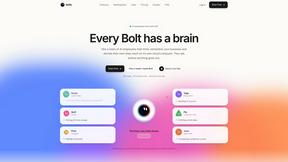

AI employees with a brain and their own cloud computer. They think, remember your business and work 24/7.
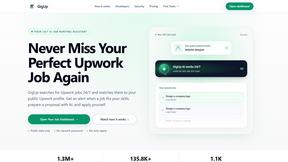

GigUp helps freelancers discover relevant Upwork jobs through AI matching, automated monitoring, and instant alerts.

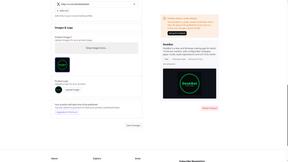

DeskBot for Kalshi event contracts. $1 first month, then $19.99/mo. Trading can lose money. Not affiliated with Kalshi.
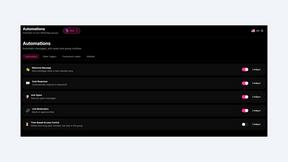

WhatsApp group bot for moderation, automation and reports: welcomes, anti-spam, link filtering, scheduling, RSS, live alerts, API and MCP.
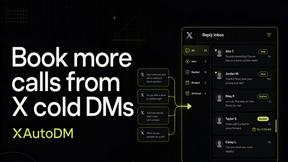

XAutoDM turns X (Twitter) DMs into booked calls: find leads, send personalized DMs, and auto follow-ups that stop on reply.
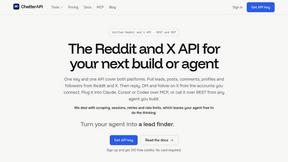

One API key and one credit balance for Reddit and X data. REST endpoints and a hosted MCP server, so your code and your agents call the same tools.

AI SEO agent that finds pages ranking for your keywords, pitches the people behind them from your inbox, and follows up. You approve every send.

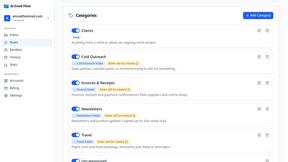

AI Email Filter sorts incoming mail into folders using plain-language prompts you write. Works with any IMAP mailbox; bring your own LLM if you want.
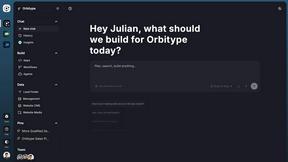



Audio to Video AI turns podcasts, narration, voice recordings, and music into visual content with prompts, reference images, flexible settings, and do


An AI tools directory that turns down money. 146 listings, 20 categories, no sponsored placement and no affiliate ordering.

Get your SaaS tool discovered. Free listing, honest screening, a dofollow link — and no way for anyone to outbid you.

Tools Network is a curated directory of the best AI tools across 25+ categories — from writing and image generation to coding and marketing.
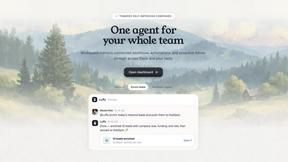


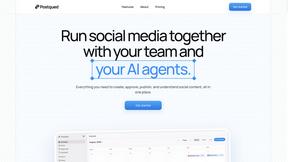

Schedule and publish social content across 10 platforms with one dashboard, API, and MCP built for teams and AI agents.
HyperLake operates within the automation and infrastructure management landscape, specifically designed as a command center for composable sovereign agentic infrastructure. It helps organizations prepare for a future where AI agents become the primary users of enterprise systems, requiring governed access to data, compute, and workflows. Users often look for alternatives due to factors such as pricing models that may not fit smaller budgets, the need for a lighter-weight solution that does not require a full-stack deployment, or a preference for integrating with a specific set of existing cloud-native tools rather than adopting a unified command center. Some teams also seek platforms that offer more specialized focus on a single domain, such as pure data governance or workflow orchestration, rather than the broad, multi-stack approach HyperLake provides. When evaluating an alternative, you should first assess how well the solution integrates with your existing infrastructure, particularly if you rely heavily on a single cloud provider like AWS or GCP. Consider the depth of governance and audit capabilities for both human and agent interactions, as this is critical for compliance and security in production environments. Look for a platform that offers flexibility in deployment—whether in your VPC, on-premises, or in a private cloud—and ensures that you can scale new AI use cases without rebuilding your operational layer each time. Finally, evaluate the learning curve and the level of support provided, as the complexity of managing agentic infrastructure requires robust documentation and responsive assistance.
HyperLake is a command center for composable sovereign agentic infrastructure, built for organizations preparing for a world where AI agents become primary users of enterprise systems. It provides a unified platform to deploy, manage, run, secure, and govern agentic infrastructure, starting with an Agentic Data Cloud Infrastructure stack that includes data, analytics, semantic, workflow, and agent tools deployed inside the customer's own VPC or private cloud. The broader vision encompasses managing multiple agentic stacks, including customer-owned cloud services, native cloud components, open-source technologies, and future agentic use cases.
HyperLake is designed for enterprises and organizations that are preparing for a shift where AI agents become primary users of infrastructure, requiring continuous access to governed compute, data, policies, and services. It is ideal for teams that need to manage and secure complex agentic workflows across multiple systems, often in regulated environments where data must remain within a customer's own VPC, private cloud, or on-premises deployment. This includes infrastructure teams, data engineers, and AI platform builders who want a production-ready end-to-end solution without rebuilding the operating layer for each new use case.
The provided content does not specify whether HyperLake offers a free tier or pricing model. As a command center for enterprise-grade agentic infrastructure, it is typically positioned as a commercial product designed for organizations that require governed, secure, and scalable deployment of AI and data stacks. To determine if a free trial or open-source version is available, you would need to consult HyperLake's official website or contact their sales team directly for detailed pricing and licensing information.
HyperLake's main features center on providing a command center for deploying, managing, running, securing, and governing agentic infrastructure. Its first product wedge is Agentic Data Cloud Infrastructure, which is an open-stack solution combining data, analytics, semantic, workflow, and agent infrastructure that can be deployed inside a customer's own VPC, private cloud, or on-prem environment. The platform is designed to manage multiple agentic stacks, including HyperLake-native stacks, customer-owned cloud services, AWS/GCP/Azure-native components, open-source technologies, governed data services, workflow systems, and MCP tools, with full auditability and governance for every human and agent interaction.